As soon as your baby starts to crawl—or even roll—the game changes. Suddenly, your once cozy, quiet home turns into an exciting obstacle course of drawers, outlets, and furniture edges just waiting to be explored by tiny hands. What seems ordinary to us becomes a fascinating world for babies, and their curiosity knows no bounds.
If you’ve ever seen a baby grab a dog’s tail, attempt to eat a shoe, or crawl headfirst toward the staircase, you already know: babyproofing isn’t optional—it’s essential. But here’s the thing—babyproofing isn’t about bubble-wrapping your entire house. It’s about creating a safe space that gives your little one room to explore, while removing the big hazards that can lead to injuries.
Every room in your home holds different risks, so taking a room-by-room approach to safety is the best way to stay thorough. Whether you’re a first-time parent or simply need a refresher before baby #2 arrives, this guide walks you through everything you need to babyproof—from the nursery to the laundry room—with practical tips that are easy to follow and implement.
Why Babyproofing Deserves More Than a Quick Fix
The truth is, accidents happen in a blink. According to the CDC, unintentional injuries are a leading cause of death among children under one year old, with many accidents occurring right at home. It’s not about being paranoid—it’s about being prepared.
Think of babyproofing as setting the stage for your child’s safe development. When your home is baby-friendly, you’re not just protecting your child from harm—you’re also reducing your stress and giving yourself peace of mind. When you don’t have to say “no” every five seconds, both you and your baby can relax and enjoy those precious early months.
Another bonus? When your environment is set up safely, you actually empower your child to explore more confidently. It becomes a win-win for everyone.
When Should You Start Babyproofing?
Ideally, babyproofing should start before your baby becomes mobile. That might sound early, but time flies faster than you think. One minute your baby is snoozing in your arms, and the next they’re pushing themselves across the floor like a determined little turtle on a mission.
Start babyproofing at around 4–6 months, giving yourself time to make thoughtful choices. Not every home is the same, and what’s dangerous in one space may not be in another. The earlier you assess and address potential hazards, the less rushed—and overwhelmed—you’ll feel.
Whole-Home Babyproofing Checklist
Before we go room by room, here’s a general list of safety items you’ll want to consider for most areas:
- Outlet covers or sliding safety plates
- Cabinet and drawer locks
- Furniture anchors and anti-tip straps
- Corner and edge guards
- Baby gates for stairways and doorways
- Cord holders and cable concealers
- Door knob covers or locks
- Non-slip mats or rugs
Now let’s break it down by room.
Living Room Safety Tips
The living room is usually the heart of the home—and a favorite baby hangout spot. But it’s also full of sharp edges, electronics, and pullable décor.
Babyproofing Tips:
- Secure the TV with a wall mount or anti-tip straps.
- Anchor all furniture, including bookshelves, cabinets, and side tables.
- Add corner guards to coffee tables and low furniture.
- Hide cords behind furniture or inside cord organizers.
- Store remotes, candles, and breakables up high or in locked cabinets.
- Install outlet covers and keep power strips hidden.
If you have a fireplace, install a soft, heat-resistant hearth cover or a baby gate around the area.
Nursery and Bedroom Safety Tips
This is where your baby sleeps and spends quiet time, so it needs to be especially safe and peaceful.
Babyproofing Tips:
- Use a crib with fixed sides, a firm mattress, and no loose bedding.
- Anchor dressers and changing tables to prevent tipping.
- Install cordless window coverings, or tie cords high and out of reach.
- Position monitors safely away from the crib and baby’s reach.
- Use drawer stops to prevent pinched fingers.
- Keep baby lotion, creams, and wipes stored up high or locked away.
Avoid using mobiles with dangling strings once your baby can sit up or pull.
Kitchen Safety Tips
The kitchen is one of the riskiest areas—loaded with sharp objects, heat sources, and toxic cleaners.
Babyproofing Tips:
- Install safety latches on all lower cabinets and drawers.
- Lock up cleaners, detergents, and sharp tools in upper cabinets or behind locks.
- Use stove knob covers to prevent little hands from turning burners on.
- Turn pot handles inward while cooking.
- Keep hot drinks and small appliances pushed far back on countertops.
- Consider a fridge lock or latch if your baby loves to pull it open.
- Skip tablecloths—they’re easy for babies to yank, causing everything to fall.
Bathroom Safety Tips
Drowning can happen in just a few inches of water, and bathrooms are full of slips and chemicals.
Babyproofing Tips:
- Use toilet locks to keep lids closed.
- Install cabinet latches for under-sink storage.
- Keep medicine, razors, and personal items out of reach.
- Use a non-slip bath mat inside and outside the tub.
- Always drain the tub completely after bath time.
- Set your water heater to 120°F (49°C) or lower to avoid scalds.
And remember: never leave your baby alone in the bath—not even for a second.
Stairs and Hallways
Stairways are a top concern for mobile babies and toddlers.
Babyproofing Tips:
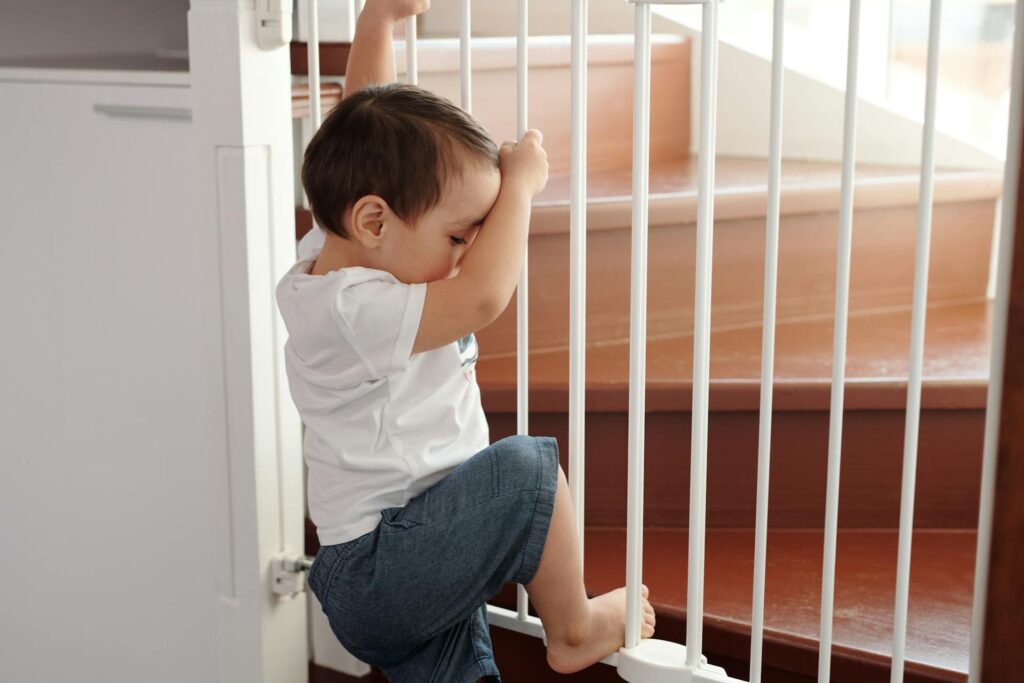
- Install baby gates at the top and bottom of all stairs.
- Use wall-mounted gates rather than pressure-mounted ones for the top of stairs.
- Make sure handrails are secure and stair edges are slip-resistant.
- Keep hallways clear of clutter and cords that can trip little feet.
Laundry Room and Utility Spaces
These are often out of sight, but they can be just as dangerous.
Babyproofing Tips:
- Store detergents and cleaning products in high, locked cabinets.
- Use childproof locks on front-loading washer and dryer doors.
- Keep laundry baskets, scissors, and tools off the floor.
- Ensure appliances are plugged in securely and outlets are covered.
If your laundry room is off-limits, consider a doorknob lock or baby gate.
Extra Babyproofing Tips Most People Forget
- Pet food and water bowls: Keep them up when not in use.
- Plants: Some are toxic to babies—double-check yours.
- Floor lamps and tall décor: If it’s easy to pull down, it’s a hazard.
- Doors that slam shut: Use finger pinch guards.
Babyproofing Is a Journey, Not a One-Time Job
Every baby develops differently. One might crawl at 6 months, another at 10. Some babies climb before they walk. That’s why babyproofing isn’t something you do once and forget—it’s something you revisit regularly as your child grows and gains new skills.
The best way to stay ahead? Get on your hands and knees and crawl through your home. You’ll be amazed at what you notice from a baby’s point of view.
You don’t need a picture-perfect setup or every gadget on the market. What matters is creating a home that’s safe, calm, and lets your child explore the world without unnecessary danger.
The written content on this page was generated by ChatGPT.