Author: Audrey Johnson

Best Organic Baby Lotions and Soaps for Sensitive Skin

Every parent quickly learns that baby skin is not just soft—it is extremely delicate. In the first months of life, a baby’s skin barrier is still developing, which means it loses moisture faster and reacts more easily to irritants. Even something that seems harmless, like a lightly scented lotion or a standard baby wash, can sometimes lead to dryness, redness, or small flare-ups.

Because of this, many parents are now choosing organic baby lotions and soaps for sensitive skin, focusing on simple, plant-based formulas that clean and moisturize without harsh chemicals.

This guide breaks down what actually matters when choosing baby skincare, which ingredients are worth trusting, and which organic products are commonly recommended for sensitive skin.

Best Organic Baby Lotions and Soaps for Sensitive Skin

Why Organic Baby Skincare Has Become So Important

Not all baby products are created equal. While many are labeled “gentle” or “mild,” that does not always mean they are free from synthetic ingredients.

Organic baby skincare focuses on formulations that are:

  • Made with naturally derived or organically grown ingredients
  • Free from harsh detergents and synthetic fragrances
  • Designed to support, not strip, the skin’s natural oils
  • Less likely to trigger irritation or allergic reactions

For babies with sensitive skin, eczema tendencies, or dryness, this approach can make daily care more comfortable and predictable.


Understanding Baby Skin Sensitivity

Baby skin is significantly thinner than adult skin. It also loses water faster, which is why dryness can appear quickly even in warm climates.

Some common signs of sensitivity include:

  • Red patches after bathing
  • Dry or flaky areas on cheeks or legs
  • Mild rashes after product use
  • Skin that feels rough instead of smooth

If you notice these signs, switching to a simpler skincare routine can often help.


Ingredients That Help Soothe and Protect

When choosing a baby lotion or soap, the ingredient list matters more than the brand name.

Gentle, skin-friendly ingredients include:

  • Aloe vera – helps cool and calm irritated skin
  • Colloidal oatmeal – strengthens the skin barrier and locks in moisture
  • Calendula extract – known for its calming, anti-redness properties
  • Shea butter – deeply nourishing and helps prevent dryness
  • Coconut oil or sunflower oil – lightweight moisturizers that absorb easily

Ingredients better avoided for sensitive skin:

  • Synthetic fragrance or perfume
  • Parabens and sulfates
  • Artificial dyes
  • Strong essential oils (especially in newborns)
  • Petroleum-heavy formulas that may clog pores

A shorter ingredient list is often a safer choice.


Best Organic Baby Lotions for Sensitive Skin

Here are some widely trusted options that parents often choose for daily hydration and skin protection.

1. Weleda Baby Calendula Body Lotion

This lotion is well-known for its use of calendula extract, a plant ingredient often used for calming irritated skin. It has a lightweight texture, making it suitable for everyday use without feeling heavy or greasy.

It works well for babies who experience mild dryness or occasional redness.


2. Earth Mama Simply Non-Scents Lotion

This is a fragrance-free formula designed specifically for highly sensitive skin. It avoids unnecessary additives and focuses on simple hydration.

Parents often choose it when their baby reacts easily to scented products or has eczema-prone skin.


3. The Honest Company Sensitive Lotion

This lotion is plant-based and designed for everyday moisturizing. It absorbs quickly and does not leave a sticky residue, which makes it convenient for regular use after baths.

It’s a popular option for parents looking for a balance between clean ingredients and affordability.


4. Noodle & Boo Super Soft Lotion

This formula is richer than most baby lotions and is often used for babies with dry or rough skin. It helps support the skin barrier while maintaining softness over time.

It’s especially useful during colder or drier weather.


5. Aveeno Baby Soothing Relief Cream

This cream is built around colloidal oatmeal, one of the most widely recommended ingredients for calming irritated skin.

It is often used when a baby’s skin needs extra moisture and protection.


Best Organic Baby Soaps and Washes

Bath products play a big role in skin health because they are used daily and can either protect or strip natural oils.

Here are gentle cleansers commonly chosen for sensitive skin:


1. Cetaphil Baby Wash & Shampoo with Calendula

A gentle two-in-one wash that cleans the skin and hair without leaving it dry. It is tear-free and suitable for daily bathing routines.


2. Human Nature Natural Baby Wash

A plant-based option that is commonly used by parents looking for a more natural, locally made product. It is mild and designed for everyday use.


3. Original Sprout Baby Shampoo & Body Wash

This is a lightweight cleanser that avoids harsh detergents. It is often chosen for newborns due to its gentle formulation.


4. Weleda Baby Calendula Body Wash

A calming wash that focuses on natural cleansing without stripping the skin’s natural oils. It pairs well with the matching calendula lotion.


5. Kyte Baby Sensitive Wash

This formula is designed for babies with dry or reactive skin. It helps cleanse while maintaining moisture balance.


How to Choose the Right Product for Your Baby

Selecting the right skincare product does not have to be overwhelming. A few simple guidelines can help narrow things down:

  • Choose fragrance-free products whenever possible
  • Start with small amounts before full use
  • Stick to simple formulas with fewer ingredients
  • Match the product to your baby’s skin condition
  • Avoid switching products too often once you find one that works

Consistency often helps the skin adjust and improve over time.


A Helpful Tip for Parents

Baby skin changes as they grow. What works during the newborn stage may not always be ideal a few months later, especially as babies become more active and exposed to different environments.

Instead of constantly changing products, focus on observing how your baby’s skin responds and adjust only when needed.

source: Dr. Pedia Mom

Final Thoughts

Choosing the best organic baby lotions and soaps for sensitive skin is really about simplifying care rather than complicating it. The goal is not to use more products, but to use the right ones—gentle, clean, and supportive of your baby’s natural skin barrier.

When you focus on safe ingredients and consistent care, your baby’s skin is more likely to stay soft, calm, and healthy throughout their early development.

The written content on this page was generated by ChatGPT.

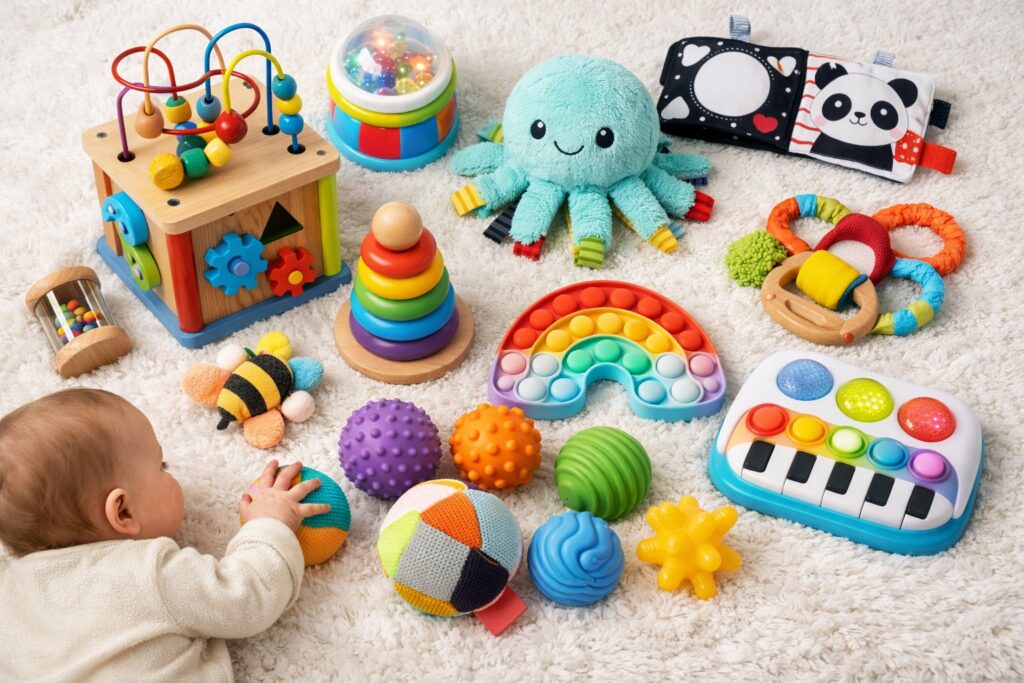
Top Sensory Toys That Stimulate Baby’s Mind and Motor Skills

Babies learn the world one tiny moment at a time. A simple touch, a soft sound, or a flash of color is often their first lesson in how life works. What may look like play is actually serious brain building in progress. Every reach, grab, shake, and stare helps shape how a baby thinks, moves, and understands their surroundings.

This is where sensory toys become so important. They are not just cute distractions. They are carefully chosen tools that support early brain development and physical coordination during the most important stage of growth.

For parents, especially first time caregivers, understanding which toys actually help can feel overwhelming. There are shelves full of options, but only a few truly support sensory learning in a meaningful way. This guide breaks everything down in a simple and practical way so you can choose toys that truly help your baby grow.

Top Sensory Toys That Stimulate Baby’s Mind and Motor Skills

Why Sensory Play Is Important in Early Development

A baby’s brain develops at a rapid pace during the first year of life. In fact, this is when most of the brain’s foundational connections are formed. Sensory play supports this process by encouraging babies to use their senses together.

When a baby touches something soft, hears a sound, and watches it move at the same time, the brain starts building connections between those experiences. Over time, this improves learning, memory, and coordination.

Sensory play helps babies develop:

Hand control and grip strength
Body movement and coordination
Early thinking and problem solving
Focus and attention
Awareness of cause and effect

Even simple actions like squeezing a toy or staring at a moving object are meaningful learning moments.


What Makes a Good Sensory Toy

Not every toy labeled as educational is truly helpful for development. The best sensory toys usually share a few important qualities.

Varied textures that encourage touch exploration
Soft but engaging sounds that are not overwhelming
Bright or high contrast colors that attract attention
Lightweight design that is easy for small hands to hold
Safe materials that are non toxic and baby friendly

The goal is not complexity. The goal is stimulation without overload.


Best Sensory Toys for Baby Development

Soft Rattles That Encourage Early Coordination

Rattles are often a baby’s first real toy, and for good reason. They respond directly to movement. When a baby shakes a rattle and hears a sound, they begin to understand that their actions create results.

This simple discovery builds early thinking skills and encourages repetition, which strengthens coordination over time. Soft handles and lightweight designs make it easier for babies to practice gripping and shaking.


Teething Toys With Different Textures

Teething toys serve two purposes at once. They help soothe discomfort during teething while also introducing different textures for babies to explore.

Some areas may feel smooth while others are bumpy or ridged. This variety helps babies understand differences in touch, which is an important part of sensory learning.

As babies chew and hold these toys, they are also improving jaw strength and hand coordination without even realizing it.


Crinkle Toys and Soft Fabric Books

Crinkle toys are especially exciting for babies because of the sound they make. That soft crinkling noise often grabs attention instantly and encourages repeated interaction.

Fabric books add even more value because they combine sound, texture, and visual storytelling. Even before babies can understand stories, they begin to recognize patterns, shapes, and colors.

These toys are especially helpful during quiet play time and early bonding moments with parents.


Activity Mats and Play Gyms

Activity mats create a full play environment that supports both movement and exploration. Hanging toys encourage babies to reach and kick, while soft surfaces support tummy time.

Tummy time is especially important because it strengthens neck, shoulder, and core muscles. Over time, this builds the foundation for crawling, sitting, and walking.

Play gyms also help babies learn how their body moves in space, which is an important part of motor skill development.


Baby Safe Mirrors

Mirrors are surprisingly powerful learning tools for infants. Babies are naturally drawn to faces, and seeing their own reflection helps them begin to recognize movement and expression.

During tummy time, mirrors encourage babies to lift their heads and stay engaged longer. This strengthens neck muscles while also supporting visual tracking skills.


Sensory Balls for Grip and Movement

Soft sensory balls are perfect for encouraging both fine and gross motor skills. Their texture makes them easy to hold, squeeze, and explore.

As babies grow, they begin rolling or tossing the balls, which helps improve coordination and spatial awareness. Different surface textures also provide added sensory input.


Musical Toys for Sound Awareness

Gentle musical toys introduce babies to rhythm, tone, and sound patterns. These early auditory experiences support listening skills and memory development.

Simple buttons or motion activated sounds also reinforce cause and effect learning. Babies quickly learn that their movement can create music or sound.


Stacking and Nesting Toys for Early Problem Solving

Even before babies can stack objects correctly, they enjoy holding, turning, and exploring stacking toys. These early interactions help build understanding of size, shape, and order.

As they grow, stacking becomes a natural next step that supports problem solving and hand eye coordination.


How Parents Can Make Sensory Play More Effective

Toys alone are not the full experience. The way you interact with your baby during play makes a big difference.

Rotate toys instead of giving everything at once to keep interest high
Sit with your baby and talk during play to support language development
Use toys during tummy time to make it more enjoyable
Watch your baby’s reactions to learn what they enjoy most
Keep play sessions short and positive to avoid overstimulation

The goal is not to fill every moment with activity but to create meaningful moments of exploration.


Safety Matters in Every Stage

Safety should always be the first priority when choosing toys for infants.

Avoid toys with small detachable parts
Check materials regularly for wear and tear
Choose BPA free and baby safe materials
Clean toys often since babies explore with their mouths
Always supervise play, especially during early months

A safe environment allows babies to explore freely without risk.

source: Emma Hubbard

Final Thoughts

Sensory toys play a quiet but powerful role in early development. They help babies understand movement, sound, texture, and interaction in a way that builds lifelong learning skills.

What matters most is not how many toys a baby has, but how meaningful those toys are. Simple rattles, soft textures, and interactive play can have a lasting impact when used consistently and with attention.

Every shake, squeeze, and touch is part of your baby’s learning journey. Choosing the right sensory toys helps make that journey more engaging, supportive, and joyful.

The written content on this page was generated by ChatGPT.
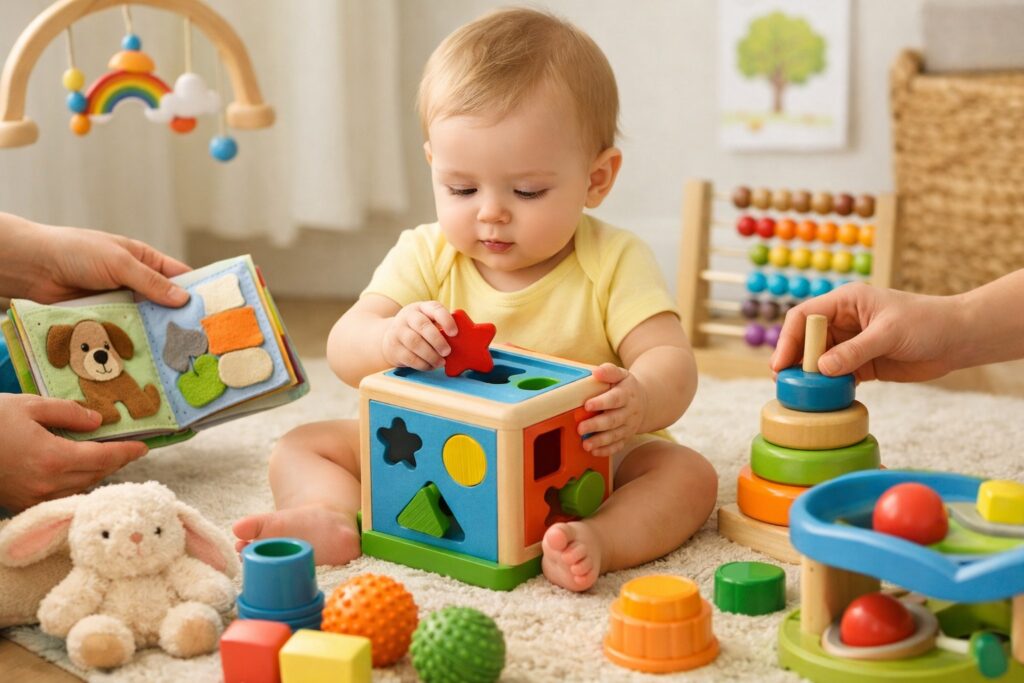
How to Choose Age-Appropriate Toys That Help Your Baby Learn

Walk into any baby store or browse online for a few minutes, and you’ll quickly realize how overwhelming toy shopping can feel. Shelves are packed with colorful gadgets promising smarter babies, faster development, and endless entertainment. For new parents especially, it raises an important question: Do babies really need all these toys, and how do you know which ones actually help them learn?

The truth is that babies do not learn from toys alone. They learn through exploration, repetition, and interaction with the world around them. The right toy simply becomes a tool that supports curiosity and development at the right moment in their growth. Choosing toys that match your baby’s age and abilities can encourage learning naturally while preventing frustration or overstimulation.

This guide will help you understand how to select toys that truly support your baby’s development while keeping playtime meaningful, safe, and enjoyable.

How to Choose Age-Appropriate Toys That Help Your Baby Learn

Why Age-Appropriate Toys Make a Difference

During the first years of life, a baby’s brain develops at an extraordinary pace. Every sound, texture, movement, and interaction helps build neural connections that shape future learning abilities. Toys that align with developmental stages encourage babies to practice new skills they are just beginning to master.

When toys are too advanced, babies may lose interest because they cannot yet understand how to use them. On the other hand, toys that are too simple may fail to hold attention long enough to promote learning. Age-appropriate toys strike a balance by offering just enough challenge to spark curiosity.

Well-chosen toys can help babies:

  • Strengthen fine and gross motor skills
  • Improve focus and attention span
  • Develop early problem-solving abilities
  • Explore sensory experiences safely
  • Build confidence through independent discovery

Rather than accelerating development artificially, the goal is to support skills that are already emerging.


Understanding Developmental Stages and Play Needs

Every baby grows at their own pace, but developmental milestones provide helpful guidance when choosing toys.

Birth to 3 Months: Discovering the Senses

Newborns are still adjusting to the world outside the womb. Their vision is limited, and they respond best to high-contrast patterns and gentle sounds.

Ideal toys include:

  • Soft rattles with subtle noise
  • Black-and-white visual cards
  • Plush toys with different textures
  • Mobiles with slow movement

At this stage, simple sensory stimulation matters more than complex features.


3 to 6 Months: Reaching and Grasping

As babies gain control over their hands, they begin reaching intentionally. Toys that encourage grasping help strengthen muscles and coordination.

Look for:

  • Lightweight rattles
  • Teething toys
  • Crinkle fabric books
  • Soft activity mats

Babies also start exploring objects with their mouths, so safe materials are essential.


6 to 9 Months: Exploration Begins

Once babies can sit independently, play becomes more interactive. They enjoy experimenting with cause and effect, such as dropping objects repeatedly just to watch them fall.

Helpful toys include:

  • Stacking cups
  • Soft blocks
  • Activity centers
  • Simple musical toys

Repetition during this stage is not boredom. It is learning in action.


9 to 12 Months: Movement and Curiosity

Crawling and pulling up open new opportunities for discovery. Babies want toys that move, respond, or encourage physical activity.

Good options are:

  • Push toys
  • Pop-up toys
  • Rolling balls
  • Interactive play tables

These toys support coordination while encouraging exploration.


12 Months and Beyond: Early Problem Solving

As babies approach toddlerhood, imitation and problem-solving become central to play.

Consider introducing:

  • Shape sorters
  • Simple puzzles
  • Toy instruments
  • Pretend play items

At this age, toys that mimic real-life activities become especially engaging.


Safety Should Always Come First

Developmental benefits mean little if a toy is unsafe. Babies explore intensely, often using their mouths, so careful inspection is essential.

Before purchasing a toy, check that it:

  • Is made from non-toxic materials
  • Has no sharp edges or loose parts
  • Meets safety standards for your region
  • Can be cleaned easily
  • Is sturdy enough to withstand dropping and chewing

Avoid toys with detachable pieces small enough to pose choking risks, especially during the first year.


Supporting Different Types of Learning Through Play

Not all toys serve the same purpose. A balanced toy collection encourages multiple areas of development.

Sensory Play

Textures, colors, and sounds help babies understand their environment. Sensory toys stimulate sight, hearing, and touch simultaneously.

Examples include textured balls, fabric books, and gentle sound toys.

Motor Skill Development

Toys that require movement help strengthen muscles and coordination.

Stacking rings, blocks, and pull toys encourage physical engagement and control.

Cognitive Development

Cause-and-effect toys teach babies that actions produce results, laying the groundwork for logical thinking.

Buttons that activate music or toys that pop open when pressed are excellent examples.

Social and Emotional Learning

Interactive toys encourage communication and bonding. Dolls, puppets, and shared play experiences help babies recognize emotions and social cues.


Choosing Toys That Grow With Your Child

Parents often feel pressure to constantly buy new toys, but versatile toys can remain useful for months or even years.

Multi-stage toys offer better long-term value because babies discover new ways to use them as skills improve.

Examples include:

  • Stacking cups used for building, sorting, and water play
  • Blocks that transition from knocking down to building structures
  • Activity tables adaptable for sitting and standing play

Open-ended toys encourage imagination rather than limiting play to a single function.


Avoiding Toy Overload

More toys do not equal more learning. In fact, too many choices can overwhelm babies and reduce focus.

A smaller selection of thoughtfully chosen toys allows deeper engagement. Rotating toys every week or two keeps playtime fresh without constant purchases.

Many child development experts observe that babies often spend longer exploring familiar toys when distractions are minimized.


How Parents Can Make Toys More Educational

The most powerful learning tool is not the toy itself but the interaction surrounding it. Babies learn best when caregivers participate.

You can enhance learning by:

  • Talking about what your baby is doing
  • Naming colors, shapes, and actions
  • Demonstrating new ways to play
  • Encouraging exploration without correcting constantly
  • Celebrating small discoveries

Even a simple rattle becomes a language lesson when paired with conversation and eye contact.


Signs a Toy Is Right for Your Baby

A well-chosen toy often leads to noticeable behaviors:

  • Your baby returns to it repeatedly
  • They experiment with new movements
  • Playtime lasts longer over time
  • Frustration remains minimal
  • Curiosity increases naturally

Engagement is a stronger indicator than flashy features or electronic functions.


Building a Thoughtful Toy Collection

Instead of chasing trends, focus on variety and purpose. A balanced collection might include:

  • One or two sensory toys
  • A motor skill toy
  • A cause-and-effect toy
  • An interactive or comfort toy
  • An open-ended toy for creativity

This approach supports holistic development without clutter.

source: Emma Hubbard

Final Thoughts

Choosing age-appropriate toys is less about finding the “perfect” product and more about understanding your baby’s current stage of growth. Toys should invite exploration, encourage movement, and create opportunities for connection between parent and child.

The best learning happens when babies feel curious, supported, and free to explore at their own pace. When toys match developmental readiness, playtime becomes more than entertainment. It becomes a foundation for confidence, creativity, and lifelong learning.

In the end, the simplest toys often create the richest experiences, especially when shared with a caring and engaged parent.

The written content on this page was generated by ChatGPT.
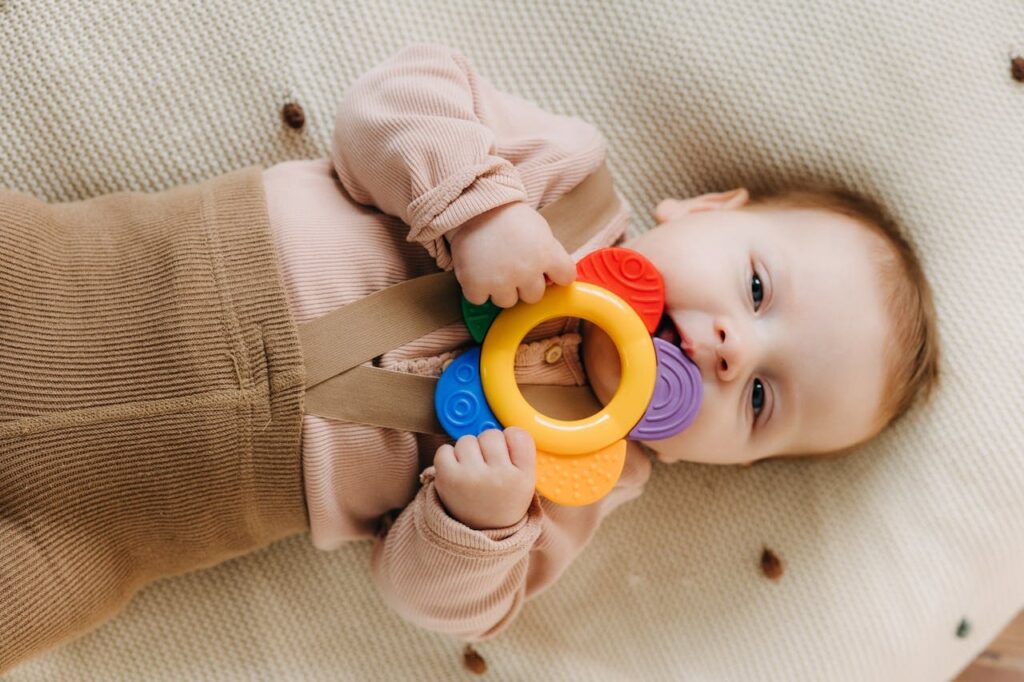
The Safest Teething Toys and Rattles for Infants (Pediatrician-Approved)

Watching your baby experience their first teeth coming in is both exciting and challenging. Those tiny teeth signal growth and development, but they often bring sleepless nights, crankiness, and lots of drool. For many parents, finding effective relief for their little one’s sore gums becomes a top priority. That’s where safe teething toys and rattles come in. These small, specially designed items can soothe discomfort, stimulate sensory development, and provide a fun distraction — but only if they’re carefully chosen.

In this guide, we’ll explore some of the safest, pediatrician-approved teething toys and rattles available today. We’ll also share practical tips to help parents select the best options and make teething a smoother experience for everyone involved.

The Safest Teething Toys and Rattles for Infants (Pediatrician-Approved)

Why Safety Matters When Choosing Teething Toys

Babies explore the world primarily through their mouths. While this curiosity is natural, it also makes them vulnerable to unsafe materials, choking hazards, and harmful chemicals. Many plastic or cheaply made teethers can contain BPA, phthalates, or other toxic substances, and small parts may break off and pose choking risks.

Safe, pediatrician-approved teething toys give parents peace of mind. They are tested for safety, made from non-toxic materials, and designed specifically for infants’ delicate gums. When shopping for teething toys, here are the most important features to look for:

  • Non-toxic materials: BPA-free, phthalate-free, PVC-free
  • Soft but durable texture: Gentle on gums but resilient enough to last
  • Easy to clean: Dishwasher-safe or sterilizable
  • Choke-proof design: No small detachable parts or sharp edges

Top Pediatrician-Recommended Teething Toys and Rattles

Below is a curated selection of some of the safest and most effective teething toys and rattles for infants, chosen based on materials, design, and pediatrician recommendations.

1. Silicone Teething Rings

Silicone teething rings are among the most popular options because they’re soft, flexible, and soothing for sore gums. Many are designed to be chilled in the refrigerator, providing an added cooling effect for inflamed areas.

Why Parents Love Them:

  • BPA-free, non-toxic, and safe for babies to chew
  • Easy to clean with soap and water or in a sterilizer
  • Lightweight and simple for infants to grasp

Recommended Options:

  • Comotomo Silicone Teether
  • Nuby Ice Gel Teether

2. Natural Rubber Teethers

Natural rubber teethers are eco-friendly and completely chemical-free. They provide a soft yet firm surface that massages gums while being safe for repeated use.

Benefits:

  • Biodegradable and free from harmful chemicals
  • Soft texture soothes sensitive gums
  • Easy for babies to hold and explore

Popular Picks:

  • Hevea Natural Rubber Teether
  • Sophie la Girafe

3. Water-Filled Teething Toys

Water-filled teethers are designed to be cooled in the fridge. The gentle chill helps numb sore gums while the textured surface encourages chewing.

Why They Work:

  • Cooling effect offers instant relief for teething pain
  • Lightweight and easy for little hands to hold
  • Available in multiple shapes and textures to keep babies engaged

Best Options:

  • Nuby Ice Gel Teether Keys
  • Munchkin Cool Chew Teether

4. Multi-Functional Rattles

Some rattles double as teething toys, providing both comfort and entertainment. These toys usually feature multiple textures, bright colors, and easy-to-grip designs that encourage sensory exploration and hand-eye coordination.

Perks:

  • Stimulates cognitive and motor development
  • Soothes inflamed gums
  • Keeps babies engaged with sounds and movement

Top Choices:

  • Manhattan Toy Winkel Rattle & Teether Toy
  • Infantino Textured Multi Ball

Tips for Selecting the Right Teething Toy

Finding the right teething toy goes beyond picking the cutest design. Here are key strategies for choosing safe, effective options:

  1. Check Age Recommendations: Always follow the manufacturer’s age guidelines to avoid choking hazards.
  2. Inspect Texture and Size: Look for soft, flexible textures that are easy for little hands to grasp, with no detachable small parts.
  3. Prioritize Hygiene: Babies put toys in their mouths constantly. Toys that are dishwasher-safe or easily sterilized are ideal.
  4. Rotate Toys: Offering different shapes and textures keeps your baby interested and provides varying types of relief.

Additional Ways to Soothe Teething Pain

Teething toys aren’t the only solution. You can combine toys with other gentle methods to help ease discomfort:

  • Cold Washcloths: Wet a clean washcloth, chill it in the fridge, and let your baby chew on it.
  • Gum Massage: Wash your hands and gently massage your baby’s gums with your finger.
  • Pediatrician-Approved Teething Gels: Only use gels recommended by your baby’s doctor, and avoid those with benzocaine.
source: Emma Hubbard

Final Thoughts

Teething is a normal and essential part of your baby’s development, but it can be stressful for both infants and parents. Using safe, pediatrician-approved teething toys and rattles can make this stage more manageable while supporting your baby’s sensory and motor development. Focus on non-toxic materials, ergonomic design, and easy-to-clean options to ensure safety and comfort. By choosing the right products and combining them with gentle techniques, teething can become a more manageable and even enjoyable experience for your baby.

With careful selection and some patience, the teething phase doesn’t have to be a nightmare — it can be a milestone celebrated safely and comfortably.

The written content on this page was generated by ChatGPT.
Best Organic Baby Lotions and Soaps for Sensitive Skin: Gentle Care for Your Little One

As a parent, nothing is more important than the well-being of your baby. From the first day at home, you want to ensure your little one’s skin stays soft, hydrated, and protected. Baby skin is incredibly delicate—it’s thinner than adult skin, more prone to irritation, and less able to retain moisture. Using harsh soaps or lotions can easily lead to dryness, rashes, or even allergic reactions.

That’s why choosing the right organic baby lotions and soaps is essential, especially for babies with sensitive skin. In this guide, we’ll walk you through the best products available, tips for safe use, and what ingredients to look for so your baby’s skin remains healthy and happy.

Best Organic Baby Lotions and Soaps for Sensitive Skin: Gentle Care for Your Little One

Why Organic Baby Skincare is the Best Choice

The term “organic” isn’t just a marketing buzzword. Organic baby products are made with naturally derived ingredients, free from harsh chemicals like parabens, sulfates, synthetic fragrances, or artificial dyes. These products are specifically formulated to reduce the risk of irritation, making them ideal for delicate skin.

Here’s why parents are increasingly choosing organic options:

  • Gentle on skin: Organic ingredients like aloe vera, chamomile, and shea butter soothe irritation while hydrating skin naturally.
  • Safer for newborns: Babies are more susceptible to toxins, so avoiding synthetic chemicals reduces exposure.
  • Environmentally friendly: Many organic brands use sustainable sourcing and biodegradable packaging.
  • Supports natural skin barrier: Ingredients in organic products help maintain the baby’s protective skin barrier, preventing dryness and rashes.

Key Ingredients to Look for in Organic Baby Lotions and Soaps

When shopping for sensitive skin, understanding the ingredients is crucial. Here are some of the best natural components to seek out:

  • Shea Butter: Deeply moisturizes and protects skin.
  • Coconut Oil: Naturally antibacterial and hydrating.
  • Aloe Vera: Calms irritation and promotes healing.
  • Calendula Extract: Reduces inflammation and redness.
  • Oat Extract: Helps soothe itchy or dry skin.
  • Jojoba Oil: Balances skin moisture without clogging pores.

Avoid lotions or soaps that contain synthetic fragrances, parabens, phthalates, or sulfates, as these can aggravate sensitive skin.


How to Choose the Right Organic Baby Lotion

Selecting the right lotion involves more than just picking a brand. Consider these factors:

  1. Hypoallergenic Formulation
    Hypoallergenic products are designed to minimize allergic reactions. They’re ideal for babies with eczema or highly sensitive skin.
  2. Pediatrician Tested
    Lotions and soaps that have undergone clinical testing for babies provide an extra layer of safety.
  3. pH Balanced
    Baby skin is naturally more acidic than adult skin. pH-balanced products maintain this delicate balance, preventing dryness and irritation.
  4. Moisturizing Properties
    Look for ingredients like shea butter, almond oil, or oat extract, which lock in moisture and prevent flakiness.

Top Organic Baby Lotions for Sensitive Skin

Here’s a curated list of parent-approved lotions designed to nourish sensitive skin:

1. Earth Mama Baby Lotion

Rich in olive oil and calendula, this lotion soothes redness and irritation. Its lightweight formula absorbs quickly, leaving skin soft and naturally fragrant.

2. Burt’s Bees Baby Nourishing Lotion

A fan favorite for its shea butter and botanical oils, this lotion keeps skin moisturized all day without leaving a greasy residue. Free from parabens, phthalates, and SLS.

3. California Baby Super Sensitive Moisturizing Lotion

Perfect for babies prone to eczema or allergies, this fragrance-free lotion is pediatrician-tested and extremely gentle.

4. Mustela Gentle Lotion for Newborns

Formulated with avocado peptides, this lotion strengthens the skin barrier and protects against dryness. Clinically proven to be safe for sensitive skin.


Best Organic Baby Soaps and Washes

Bath time can be soothing, but harsh soaps can strip the skin of its natural oils. Here are the safest options for sensitive baby skin:

1. Dr. Bronner’s Pure-Castile Baby Soap

Made with coconut and olive oils, this biodegradable soap cleans gently without leaving residue. Suitable for both bath and handwashing.

2. Weleda Calendula Body Wash

Calendula extract calms irritation, making it ideal for daily use. This natural formula is certified organic and safe for newborns.

3. Honest Company Organic Baby Soap Bar

Fragrance-free and hypoallergenic, this soap is excellent for babies with allergy-prone skin.

4. Babyganics Foaming Baby Shampoo & Body Wash

Plant-based, tear-free, and gentle, this foaming wash combines soothing botanicals with effective cleansing.


Tips for a Gentle Baby Skincare Routine

A few simple habits can make a big difference in protecting sensitive skin:

  • Patch Test New Products: Apply a small amount to your baby’s inner arm before using full-body.
  • Moisturize Right After Bath: Lock in hydration while skin is still slightly damp.
  • Limit Bath Time: 5–10 minutes is sufficient; long, hot baths can dry skin.
  • Use Lukewarm Water: Hot water irritates delicate skin.
  • Fragrance-Free is Safer: Even natural scents can trigger reactions in some babies.
  • Avoid Over-Cleansing: Focus on key areas like the diaper region, face, and hands rather than scrubbing the whole body daily.

Additional Considerations for Sensitive Skin

Some babies may experience eczema, cradle cap, or rashes, which require special care:

  • For eczema, use thick, fragrance-free creams and avoid soaps with harsh surfactants.
  • For cradle cap, gentle washes with natural oils like coconut or olive oil help loosen scales without irritation.
  • Always consult a pediatrician if you notice persistent redness, swelling, or unusual reactions.
source: NaturallyTek

Conclusion: Protecting Your Baby Starts with the Right Products

Sensitive baby skin deserves gentle, natural care. By choosing organic baby lotions and soaps, parents can reduce the risk of irritation, dryness, and allergic reactions while supporting the skin’s natural barrier. Brands that are hypoallergenic, pH-balanced, and pediatrician-tested give you peace of mind during bath time and daily skincare routines.

With the right products and proper care, you can ensure that your baby’s skin stays soft, hydrated, and happy, making every bath a comforting and nurturing experience.

The written content on this page was generated by ChatGPT.
What to Do When Your Baby Only Wants Mom (and Dad Feels Left Out)

It happens quietly, often in the middle of an ordinary day. You reach out to hold your baby, but those tiny arms stretch right past you—straight for Mom. Maybe it’s during bedtime, or when you’re trying to soothe their tears after a long cry. And no matter how hard you try, it feels like your baby just doesn’t want you.

If you’re a dad going through this, you’re far from alone. Many fathers experience that quiet sting of feeling unnecessary, even though their hearts are fully in it. It’s not rejection. It’s not failure. What you’re seeing is a completely normal part of how babies develop attachment—and there’s plenty you can do to bridge that gap.

What to Do When Your Baby Only Wants Mom (and Dad Feels Left Out)

Why Babies Often Gravitate Toward Mom

In the early months, babies rely heavily on familiarity. They recognize scents, voices, and rhythms long before they understand faces or words. For most newborns, Mom’s heartbeat and scent are their earliest comforts. If she’s the one doing the majority of feeding, rocking, or soothing, your baby’s brain begins linking her presence with safety.

This isn’t a reflection of how much love your baby has for you—it’s simply how they’re wired to feel secure. Babies don’t form emotional preferences like adults do. They react to what’s familiar and soothing. As they grow, that sense of comfort expands—and this is exactly where your presence begins to matter more than ever.


Step One: Don’t Let It Hurt Your Confidence

It’s natural to feel left out when your baby won’t settle with you or cries harder when you try. Every instinct tells you to pull back, to stop trying. But your baby isn’t rejecting you. They’re communicating in the only way they can—seeking what feels safest at the moment.

The best thing you can do is stay consistent. Keep showing up. Even when your baby cries, even when they squirm, even when it feels thankless. Babies sense steadiness, and over time, they’ll learn that your arms are just as safe as Mom’s.

Your calm, patient energy will speak louder than anything else.


Step Two: Carve Out “Dad Time” Every Day

One of the most powerful ways to build connection is through small, repetitive moments that belong only to you. It doesn’t need to be complicated or long—just consistent.

Try creating little rituals around daily care:

  • You could be the one who gives the evening bath—a chance for soft laughter and gentle splashing.
  • Take short morning walks with the stroller before work.
  • Try babywearing while reading or listening to soft music.
  • Turn diaper changes into tiny moments of play and chatter.

Even brief, predictable interactions help your baby form new associations. Your voice, your smell, your rhythm—they all become familiar cues of safety. That’s how real attachment begins: in repetition, not grand gestures.


Step Three: Team Up, Don’t Compete

Sometimes Mom becomes the “default parent” by habit, especially when the baby reacts more calmly to her. That can unintentionally reinforce the pattern. The trick isn’t to take over, but to work together.

Start small. Have Mom stay close by while you take over a soothing routine—perhaps rocking or feeding from a bottle. Gradually, as your baby adjusts, she can step out of the room for longer stretches. This slow, cooperative handoff helps your baby realize that comfort doesn’t vanish when Mom’s not in sight—it simply shifts.

This approach also eases the pressure for both of you. Parenting works best as a shared rhythm, not a tug-of-war.


Step Four: Embrace Your Unique Bond

Dads often connect through playfulness, movement, and laughter. While Mom may be the go-to for comfort, dads tend to introduce a sense of adventure and curiosity.

As your baby grows, you’ll notice the shift. You’ll become the one they turn to for games, for silly sounds, for confidence when exploring something new. Babies look to their fathers for cues about safety and the world beyond their comfort zone.

So, don’t measure your connection against Mom’s. Yours is just as vital—just different in its texture.


Step Five: Be Honest About How You Feel

Many dads silently swallow their frustration, telling themselves it’s no big deal. But those quiet feelings can build up. It’s okay to admit that it hurts, or that you feel unnecessary sometimes. Sharing those emotions with your partner opens space for understanding and teamwork.

It’s also a reminder: you don’t need to be perfect to be loved by your child. What matters most is that you’re present, patient, and willing. Babies remember consistency long before they remember faces.


Step Six: If It Feels Extreme, Don’t Ignore It

Occasionally, a baby’s intense distress around one parent might point to something beyond normal attachment behavior—especially if they consistently avoid eye contact, resist touch, or show extreme anxiety. In that case, talk to your pediatrician. Sometimes, subtle developmental or sensory factors are at play, and early guidance can help both parent and child thrive.

For most families, though, this phase passes naturally. One day, often without fanfare, your baby will crawl toward you, arms open, choosing your comfort without hesitation.

source: Emma Hubbard

Love Isn’t Measured in Moments—it’s Built Over Time

Babies change faster than we realize. The same child who clings to Mom today may be the one shouting “Daddy!” from across the room tomorrow. What matters most is not who they reach for in the moment, but who they learn they can rely on.

Keep being the steady presence in the background, the warm pair of arms always ready, the calm voice that never disappears. These little things—your patience, your constancy—are what shape your child’s lifelong understanding of love.

Dad, your bond isn’t secondary. It’s simply unfolding on its own beautiful timeline.

The written content on this page was generated by ChatGPT.

Coping with Guilt as a New Parent: You’re Not Doing It Wrong

There’s a moment after you bring your baby home when the excitement fades and the silence of the house feels heavier than you expected. You look at this tiny person in your arms, and instead of pure joy, you feel… guilt. Guilt that you’re not doing enough, not feeling what you thought you’d feel, or not getting it “right.”

It’s something almost every new parent goes through but rarely talks about out loud. That nagging feeling that maybe you should be happier, calmer, more patient, more prepared — anything but this uncertain version of yourself trying to figure things out one diaper at a time.

If this sounds familiar, take a breath. You’re not broken. You’re not failing. You’re simply human, navigating one of life’s biggest transitions while trying to meet impossible standards. And you are absolutely not doing it wrong.

Coping with Guilt as a New Parent: You’re Not Doing It Wrong

Why Guilt Finds Its Way Into Parenthood

Parental guilt doesn’t arrive all at once. It builds slowly, creeping in between sleepless nights and the endless comparisons we make — especially in the age of social media. It’s easy to scroll through your feed and see other parents who seem to have it all together: smiling babies, spotless nurseries, and cheerful captions about how “blessed” they feel.

But what you don’t see are the messy moments behind those pictures — the tears, the doubts, the exhaustion. Everyone struggles, even the ones who look like they’re thriving.

For many, guilt begins with small thoughts:

  • “Why can’t I breastfeed as easily as others?”
  • “Am I ruining my baby’s routine by working full-time?”
  • “Should I feel happier right now?”
  • “Do other parents ever lose their patience like I do?”

These thoughts multiply until guilt starts to feel like a permanent companion. Understanding why it happens is the first step to loosening its grip.


The False Ideal of the “Perfect Parent”

Somewhere along the way, we were sold the idea that good parents are superhuman — people who never raise their voices, always know what to do, and somehow keep their lives perfectly organized. That image is not just unrealistic; it’s harmful.

Babies don’t need perfect parents. They need present ones. They need people who respond to their cries, hold them close, and love them through the chaos. If you’re showing up — tired, messy, learning as you go — you’re already doing what matters most.

In fact, research shows that “good enough” parenting fosters resilience. Babies who experience love, repair after small conflicts, and genuine connection grow up secure. So stop chasing perfection; it doesn’t exist. You’re already giving your child what they truly need.


How to Ease the Weight of Guilt

1. Replace Harsh Thoughts with Kind Truths

Notice the way you talk to yourself. That quiet inner voice can be cruel: “I’m not doing enough,” “I messed everything up,” “I’m a terrible parent.”
When you catch those thoughts, gently rewrite them:

“I’m learning, and that’s okay.”
“My love is enough for my baby.”
“I can rest without feeling guilty.”

Your words shape how you experience parenthood. Speak to yourself the way you would speak to your best friend — with compassion, not judgment.


2. Accept That Balance Looks Different for Everyone

Some parents work full-time. Some stay home. Some breastfeed; others use formula. None of those choices determine your worth. What matters is that your baby feels safe and loved.

Let go of comparison. Your version of balance will not look like anyone else’s — and that’s perfectly fine.


3. Make Space for Yourself (Without Apology)

Parenthood can consume every ounce of energy you have. Taking time for yourself isn’t selfish; it’s a form of survival. A 20-minute walk, a warm bath, even five minutes of silence can reset your mood and remind you that you’re more than just someone’s parent.

Your baby benefits from your peace of mind. A calm, cared-for parent is the best gift you can give your child.


4. Find Your Support Circle

There’s power in hearing another parent say, “Me too.” Seek out honest spaces — parenting groups, online forums, local meetups — where people talk about the real parts of raising kids.

Sharing your story helps lighten the emotional load. You’ll find out quickly that no one has it all figured out — and that’s strangely comforting.


5. Let Go of the Fear of Mistakes

Every parent makes them. Every single one.
You’ll forget a pacifier, feed too late, lose your patience, or misjudge your baby’s needs. But none of that defines you. Mistakes are part of learning how to parent your unique child.

Babies are resilient. What they remember most is not your slip-ups, but your effort to comfort, connect, and try again.


6. Focus on What Truly Matters

When you measure your success, skip the checklists. Instead, look at the quiet victories:

  • Your baby smiled because they feel safe.
  • You made it through another night.
  • You comforted them when they needed you most.

Those small moments are the real markers of good parenting — not how much you accomplish in a day.


When the Guilt Becomes Too Heavy

If your guilt lingers no matter what you do, or it starts to feel like sadness, emptiness, or anxiety, it might be something deeper — such as postpartum depression or postpartum anxiety.

There’s nothing shameful about seeking help. In fact, reaching out to a doctor, therapist, or support group is one of the strongest, most loving choices you can make for yourself and your baby. Healing doesn’t mean you’re weak — it means you care enough to get better.

source: The Unplanned Podcast

A Gentle Reminder Before You Go

Parenthood isn’t a straight line. It’s full of messy mornings, unplanned tears, and moments that take your breath away. Through all of it, your baby doesn’t need a perfect version of you — just the one that keeps showing up with love.

You’re not doing it wrong. You’re simply living through the hardest, most beautiful chapter of your life. And someday, when your child looks back, they won’t remember the times you felt guilty — they’ll remember the warmth of your arms, the sound of your laugh, and the feeling of being loved beyond measure.

So take a deep breath. You’re doing far better than you think.

The written content on this page was generated by ChatGPT.

Helping Siblings Adjust to a New Baby: What Really Works

Welcoming a new baby is undoubtedly a joyous event that brings excitement and warmth to any family. Yet, this exciting transition can also stir up complex and sometimes difficult emotions among older siblings. Adjusting to the presence of a new family member means shifts in attention, routines, and roles, which can be confusing for young children. The way parents support their older kids during this period can significantly influence how well everyone settles into their new family dynamic. What follows is a thorough exploration of effective strategies to help siblings embrace their new baby brother or sister with openness, love, and understanding.

Helping Siblings Adjust to a New Baby: What Really Works

Recognizing the Emotional Landscape of Older Siblings

Bringing a baby into the family is a massive adjustment for older children as well. Their emotions often blend excitement and curiosity with uncertainty, jealousy, or even feelings of insecurity. These are completely natural responses to a profound change in their world. Acknowledging these feelings openly can lessen their intensity. When children feel understood and accepted, they are more likely to voice their emotions in constructive ways, rather than acting out or withdrawing. Parents can encourage this expression by validating feelings with statements like, “It’s okay to sometimes feel unsure about the new baby. You are still very important to me.”

Preparing Older Children Before Baby’s Arrival

The adjustment starts best even before the newborn arrives. When older siblings are introduced to the idea of a new baby gradually and positively, they develop a sense of anticipation rather than surprise or anxiety. Parents can read books together about welcoming new siblings, talk about what a baby needs, and involve children in preparations like selecting clothes or setting up the nursery. This preparation creates a shared sense of belonging and purpose, establishing the older child as an essential part of the new family chapter.

Maintaining Individual Attention

One of the biggest challenges after a baby arrives is ensuring that older siblings still receive ample affection and attention. Even small amounts of dedicated one-on-one time can help children feel secure and valued. This could be as simple as reading a favorite story before bed, a special walk around the park, or a quiet time playing a game together. These moments, free from distractions, send a powerful message: their relationship with parents is just as important as ever.

Encouraging Active Roles for Siblings

Older siblings often adapt better when they feel they have a meaningful role in caring for the baby. Simple tasks such as fetching diapers, choosing a toy, or helping during feeding time provide opportunities for connection and responsibility. Praising these efforts reinforces their importance and builds confidence in their new role as a big brother or sister. When children are included in baby care, they shift from feeling sidelined to feeling empowered and proud.

Keeping Routines Familiar and Providing Personal Space

During such transitions, preserving certain routines offers older siblings a sense of stability. Meal times, playtimes, and bedtime routines should remain as consistent as possible. Providing a personal space — a special corner or room just for them — where they can retreat and be themselves also supports their emotional well-being. This physical and emotional boundary respects their individuality beyond their role as an older sibling.

Patience with Behavioral Changes

It’s common for older children to express their emotions through behaviors such as clinginess, regression, or occasional tantrums after a baby arrives. Rather than reacting with frustration, parents benefit from patience and empathy. Understanding these behaviors as attempts to communicate feelings or seek reassurance allows for a gentler and more effective response, fostering a nurturing environment that encourages emotional growth.

Building a Support Network Around Siblings

Expanding the circle of support beyond parents to include other caregivers, relatives, and close family friends enriches the sibling’s adjustment process. When grandparents, aunts, uncles, or trusted friends invest time and affection in the older child, it reinforces that they remain loved and celebrated. Encouraging positive interactions also helps distribute attention in a way that prevents feelings of neglect.

Celebrating the New Sibling Bond

Over time, nurturing moments of kindness, cooperation, and fun between siblings builds an affectionate relationship that lasts a lifetime. Celebrating small achievements, like the older sibling gently soothing the baby or sharing toys, creates positive reinforcement. Establishing special traditions that honor the sibling connection, such as sibling storytime or shared outings, also deepens their bond.

source: Eugene Pediatric Associates

Helping older children adjust to a new baby is as much about honoring their feelings and identity as it is about welcoming a new life. Families that approach this transition with empathy, preparation, and consistent love enable siblings to forge strong connections and find joy in their evolving roles. With patience and intention, what begins as a period of adjustment blossoming into a lifelong friendship full of affection and mutual respect.

This approach emphasizes emotional validation, inclusion, and routine stability — key ingredients that help siblings navigate the arrival of a new family member with resilience and warmth.

The written content on this page was generated by perplexity.ai.

How to Build a Parenting Routine When You Don’t Have a Set Schedule

Creating a parenting routine when your days don’t follow a fixed schedule can feel overwhelming. For many families, particularly those juggling irregular work hours, unpredictable events, or simply preferring flexibility, a traditional rigid timetable isn’t realistic. Yet, having no routine at all can lead to chaos, stress, and worn-out parents and kids. So how can you strike a balance that feels manageable, supportive, and nurturing—even when your calendar isn’t set in stone?

The secret lies in building a routine that’s adaptable, anchored by meaningful rhythms, and designed with your family’s unique flow in mind. It isn’t about clocking every minute but weaving patterns that create predictability, comfort, and collaboration, without the pressure of strict timings. Let’s dive into a comprehensive approach to developing such a flexible parenting routine, full of practical tips and thoughtful strategies.

How to Build a Parenting Routine When You Don’t Have a Set Schedule

Finding Your Day’s Natural Anchors

Even if your hours shift, some activities happen daily for nearly every family: meals, waking up, naps or quiet time, and bedtime. These moments serve as natural anchors around which other parts of the day can flow. For instance, breakfast often follows waking up, lunch fits somewhere around midday, and bedtime rituals help children wind down. Identifying these anchor points gives everyone touchstones that provide comfort and a sense of what’s coming next.

It helps to think of these anchors less as strict appointments and more as fixed “events” that help children anticipate and understand the day. This predictability reduces anxiety, fussiness, and power struggles because children thrive when they can expect what comes next—even if the exact timing shifts day to day.

Embracing Time Blocks Instead of the Clock

When set schedules aren’t practical, focusing on time blocks rather than exact hours creates space for flexibility. For example, instead of “playtime at 9:00 AM,” aim for “morning playtime that starts after breakfast and lasts about an hour.” This way, parents aren’t racing against the clock, and children can engage naturally without feeling rushed.

Using broader blocks for key activities—like meals, creative play, outdoor time, and rest—allows you to adapt based on moods, energy levels, or unforeseen changes in the day. You keep order and intention without becoming a slave to exact times.

Visual Cues and Simple Charts Help Kids Stay on Track

Young children especially benefit from visual aids that outline the day’s flow. A simple whiteboard, colorful chart, or magnetic board with pictures representing activities can give your child an easy way to see what’s coming up. Allowing kids to move magnets or check off completed tasks involves them actively, fostering a sense of control and cooperation.

Visual routines reduce the need for constant reminders and help weekends, holidays, or irregular days feel less disruptive. It makes the rhythm of the day tangible for little ones who may not yet grasp the concept of time.

Flexibility Is the Heart of the Routine

The goal of your routine isn’t perfection but peace of mind. Life will throw curveballs, from surprising guests to delayed naps or sudden work calls. Building a mindset and practice of flexibility means accepting that some days won’t fit the routine exactly—and that’s okay. Your routine serves as a guiding framework, not a harsh rulebook.

Check in regularly to reshape your routine based on what’s working, what isn’t, and upcoming changes like weather, school schedules, or family events. This ongoing adjustment helps routines stay relevant and effective.

Prepare Calming Transition Rituals

Transitions between activities—like moving from energetic playtime to a quieter snack or getting ready for bed—can trip up kids and parents alike. Creating gentle signals or rituals to mark these changes is a game-changer. This could be a favorite clean-up song, a fun countdown, or a short story before lights out.

When kids know how one part of the day ends and the next begins, resistance decreases, smoothness increases, and moments feel more connected rather than disjointed.

Group Errands and Chores to Establish Flow

To minimize back-and-forth trips or unexpected energy spikes, group similar tasks into certain parts of the day or week. Whether it’s grocery shopping, laundry, or outdoor adventures, having set chunks of time dedicated to these can create predictability for everyone.

Children feel more secure when they know “we do errands after lunch” instead of guessing when or if you’ll leave the house. This also helps parents carve out pockets of uninterrupted time.

Involve Your Children in Shaping Their Routine

Even the youngest kids appreciate contributing to their daily plans. Offering simple choices—like what snack to eat, which book to read next, or outdoor activity preference—gives them a sense of ownership without overwhelming options.

When children feel heard, they’re more cooperative, and it plants seeds of autonomy and responsibility that build lifelong habits.

Use Screen Time Wisely Within the Flow

If screen time is part of your family’s routine, try framing it strategically. Reserve digital time for moments when parents may need focused attention elsewhere or as a calming pre-bedtime activity. Avoid using screens as a default during chaotic moments, or children may come to expect it as the only way to transition or resist.

Clear parameters that fit your family’s values keep screen habits healthy and balanced without adding stress.

Be Kind to Yourself and Celebrate Progress

Finally, remember that creating and maintaining a flexible routine is a gradual process. Some days will be fluid and imperfect. That’s normal and okay. Embrace patience and celebrate small victories—like smoother mornings, calmer meals, or easier bedtimes.

Routines aren’t about stiffness; they’re about creating a foundation where love, understanding, and fun can flourish even in the midst of unpredictability.

source: St. Louis Children’s Hospital

The Takeaway

Building a parenting routine without a set schedule means shifting from clock-watching to rhythm-building. It’s about crafting anchor points, flexible blocks, and meaningful rituals that work with your family’s unique lifestyle instead of against it. Through visual support, involvement, and kindness, routines can bring calm and confidence to parents and kids alike—even when life refuses to stay on schedule.

By embracing this adaptable approach, parents can reclaim their days with intention and peace, creating a wonderful environment for children to thrive no matter what hour the clock shows.

The written content on this page was generated by perplexity.ai.

Returning to Work After Maternity Leave: A Real-World Guide for Moms Getting Back into the Game

When you’re deep in the thick of newborn life—running on two-hour naps, feeding around the clock, and learning your baby’s every cue—it can feel impossible to imagine going back to work. But that day arrives sooner than you think. And when it does, you’re not just returning to a job; you’re stepping into a whole new phase of motherhood and identity.

The truth is, no one prepares you for the whirlwind of emotions that can hit when maternity leave ends. You might feel eager to reconnect with colleagues and reclaim your sense of self. At the same time, you may feel anxious, guilty, or even lost. This isn’t just a schedule adjustment. It’s a life pivot—one that deserves careful emotional and logistical planning.

This article breaks down everything you need to know, feel, and do to prepare for your return to work—without losing yourself (or your sanity) in the process.

Returning to Work After Maternity Leave: A Real-World Guide for Moms Getting Back into the Game

1. Normalize the Emotional Tug-of-War

You’re not crazy if you’re having mixed emotions. One moment you’re excited to wear real clothes again. The next, you’re crying while packing a diaper bag for daycare. That inner conflict? It’s a natural part of this transition.

Instead of fighting those emotions, acknowledge them. Let yourself grieve the end of this unique chapter. Cry if you need to. Talk to another mom who’s been through it. Write about your fears or excitement. Processing what you’re feeling isn’t a sign of weakness—it’s a step toward emotional clarity.

Many moms find that once they stop resisting the hard feelings, those feelings lose their grip. You can be a devoted parent and a thriving professional. These two roles are not at odds—they are both part of who you are becoming.


2. Begin Preparing Weeks, Not Days, Before Your Return

Don’t let your return-to-work date sneak up on you. Instead of dreading that Monday on the calendar, use the final few weeks of leave to gradually prep for the transition.

Start by reconnecting with your workplace. Reach out to HR to confirm your return date and clarify any updates to your schedule. Review your company’s policies on parental accommodations, such as pumping breaks or hybrid work arrangements. Don’t assume anything—policies and teams can shift during your time away.

At home, begin adjusting your sleep and feeding routines to more closely resemble what your workday will look like. This helps both you and your baby ease into a more structured flow, reducing stress when the real countdown begins.


3. Choose Childcare You Feel Good About—and Test It Early

One of the most anxiety-inducing parts of returning to work is trusting someone else with your baby. Whether you’ve lined up a daycare, hired a nanny, or are relying on a family member, don’t wait until your first day back to test the waters.

Schedule a few trial runs. Leave your baby with the caregiver for a couple of hours while you go to a coffee shop, run errands, or simply take a breather. This isn’t just for your baby—it’s for you. It builds familiarity and gives you the space to identify concerns and resolve them early.

When evaluating childcare:

  • Observe how the caregiver interacts with your baby.
  • Confirm emergency protocols and hygiene standards.
  • Make sure communication feels easy and open.

Peace of mind is worth its weight in gold—and you’ll need that emotional bandwidth once you’re juggling meetings, commutes, and milk storage.


4. Rehearse Your New Routine Before the Big Day

Getting ready on time with a baby is a completely different beast than your pre-parenting morning hustle. That’s why it helps to run practice days before you go back to work.

Wake up at the time you’ll need to during workdays. Go through your full routine—feeding, diapering, getting dressed, prepping bags. Then step outside and go somewhere for an hour. This process helps you:

  • Spot gaps in your prep routine.
  • See what needs to be packed the night before.
  • Identify how long it really takes to get out the door.

More than anything, it gives you a confidence boost when it counts.


5. If You’re Breastfeeding, Make Pumping at Work as Easy as Possible

For moms who plan to continue breastfeeding, returning to work adds a layer of logistical complexity. The good news? With a little prep, pumping at work can be manageable.

Get familiar with your breast pump before your first day. Know how to assemble, clean, and store parts quickly. Invest in a hands-free pumping bra to save time during sessions.

Create a dedicated “pumping kit” that stays in your bag:

  • Pump and charger
  • Milk storage bags
  • Cleaning wipes or sanitizer spray
  • A small cooler with ice packs

Also, block off pumping sessions in your calendar and talk to your employer ahead of time about where and when you’ll need to pump. Advocate for your needs—your milk supply and comfort depend on it.


6. Manage Your Expectations (and Everyone Else’s)

Here’s something many moms wish they had heard earlier: You don’t have to be perfect at everything—especially not right away.

Don’t expect to jump back into your pre-baby pace at work. Your brain might feel foggy, your energy might waver, and that’s okay. Allow yourself to work your way back into full productivity.

Set boundaries with your team. Avoid saying yes to every extra task just to prove you’re “still committed.” Your work speaks for itself—trust that.

At home, lower the bar. If laundry piles up or you order takeout again, it doesn’t mean you’re failing. This is a season of transition. Let it be messy.


7. Create a Support Network (Even If You’re Not a “Group” Person)

Whether you’re introverted or outgoing, having a few people in your corner makes all the difference. That support might look like:

  • A friend you text when you’re having a rough day.
  • A co-worker who’s also a mom and gets the juggle.
  • An online mom group where you can vent or ask questions.

No one should have to navigate this shift alone. Even a weekly check-in with someone who “gets it” can be a lifeline.

If you can, talk to your partner regularly about how the routine is working (or not). Keep communication open. This is a team effort, and sharing the load emotionally is as important as sharing the chores.


8. Communicate Clearly With Your Employer or Manager

Having a transparent conversation before returning to work sets the tone for everything that follows. Don’t be afraid to advocate for what you need—whether it’s a modified schedule, temporary flexibility, or clarity on expectations.

If possible, request a gradual return. Even starting with two or three days per week, or half-days for the first week, can ease the transition and reduce overwhelm.

Come prepared with solutions. For example:

  • “I’ll be working remotely on Wednesdays, which will help with childcare logistics.”
  • “I’ll need to block out time for pumping twice a day, and I’ve already adjusted my calendar to reflect that.”

You’re not asking for favors. You’re creating space to do your best work as both a professional and a parent.


9. Protect Time for Yourself—Even If It’s Only 10 Minutes

Once work ramps up and baby demands remain constant, it’s easy to lose yourself. But the version of you who feels centered and whole is the one your baby needs most.

Self-care doesn’t have to be elaborate. A short walk at lunch. A quiet shower without rushing. Listening to music or a podcast on your commute. These small moments ground you and recharge your spirit.

The guilt that comes with taking time for yourself is real—but it’s misplaced. You are allowed to care for yourself just as much as you care for your family.


10. Celebrate the Small Wins (They Matter More Than You Think)

Did you survive your first day back without crying in the office bathroom? That’s a win. Did you remember the milk, the pump parts, your laptop, and your lunch? That’s a miracle. Celebrate it.

Returning to work after maternity leave is no small feat. It’s a balancing act that requires resilience, compassion, and a whole lot of logistical juggling. You’re learning a new version of yourself—one that’s stronger, wiser, and more capable than ever before.

source: Chelsea Hernandez

You’re Not “Going Back”—You’re Moving Forward

This isn’t just a return to your old life. It’s the beginning of something new. You’re not who you were before maternity leave—and that’s a good thing. You’ve grown in ways no resume can reflect.

With a little planning, a lot of grace, and a reminder that you are not alone, this next chapter can be one of growth and balance.

You’ve got this, mama. Truly.

The written content on this page was generated by ChatGPT.