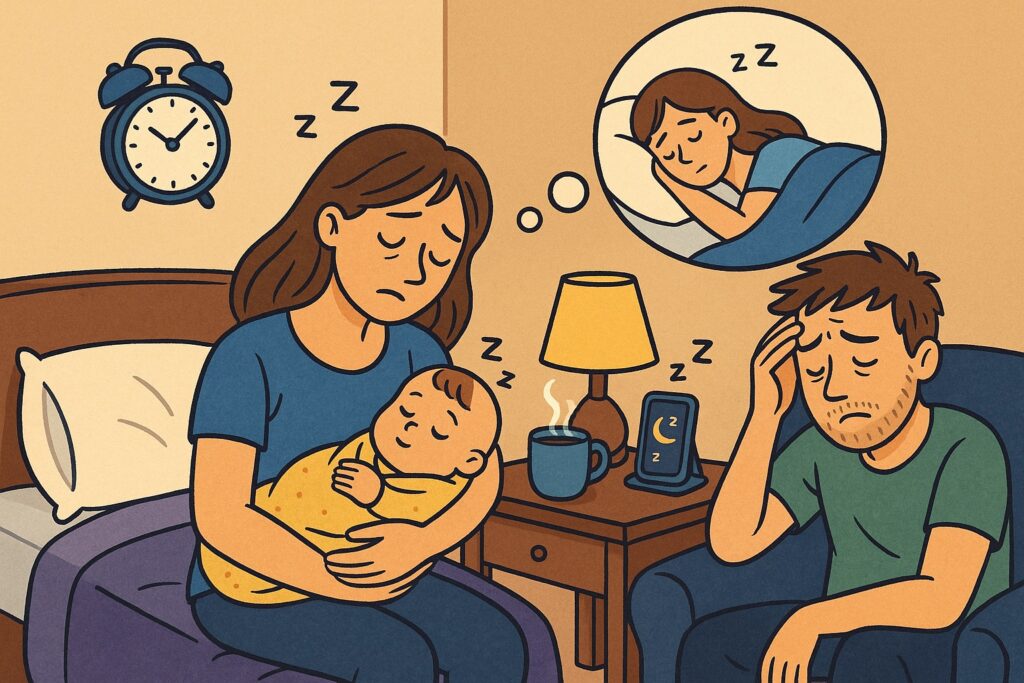
Let’s be honest — nothing truly prepares you for the sleepless nights that follow bringing your baby home. Whether you’re navigating the cries of a hungry newborn at 2 a.m. or feeling like a walking zombie by noon, you’re far from alone. Sleep deprivation isn’t just a part of early parenthood — for many, it becomes a defining feature.
But that doesn’t mean you have to suffer through it blindly. While those long nights are unavoidable in the beginning, there are healthy ways to manage the exhaustion and stay functional (and even optimistic) during this challenging chapter.
Why You’re So Exhausted — And It’s Not Just About Night Feeds
Sleep deprivation in new parents doesn’t only come from nighttime wake-ups. It’s the constant mental load. You’re feeding, changing, rocking, worrying, and doing it all on repeat with no clear finish line in sight. Even when you do lie down, your brain might still be wired — replaying the day, listening for cries, or wondering if your baby is breathing.
You’re dealing with fragmented sleep, hormonal changes, and a complete shift in identity — all at once. That’s a heavy load for anyone.
What Sleep Deprivation Does to You (That You Might Not Realize)
Sure, you’re tired. But there’s more going on beneath the surface. Prolonged lack of sleep can lead to:
- Mood swings or even rage episodes
- Difficulty concentrating or making decisions
- Lowered immunity (hello, recurring colds)
- Heightened anxiety or signs of postpartum depression
- A shorter fuse with your partner, family, or even your baby
If you feel more forgetful, foggy, or emotional than usual — you’re not imagining things. Your brain is literally struggling to function under sleep debt.
How to Cope: 12 Tips That Truly Help Tired Parents
Let’s skip the generic advice and get into strategies that real parents swear by. These aren’t magic fixes, but small, intentional actions that make the tough days more manageable.
1. Sleep When You Can — Not Just When the Baby Sleeps
Yes, the “sleep when the baby sleeps” advice can feel unrealistic. But think of it this way: Even 20–30 minutes of shuteye during the day can offset the fog. Don’t use baby nap time to fold laundry. Close your eyes. Even resting without sleeping gives your body a break.
2. Take Turns (Seriously)
If you have a partner, work out a system. Whether it’s alternating night shifts or splitting the week into early and late duties, give each other blocks of uninterrupted sleep. If you’re solo parenting, ask a trusted friend or relative to help, even just once a week, so you can catch a longer rest.
3. Let Go of the Superhero Mentality
This is not the time to do everything. Dishes can wait. Floors don’t need to sparkle. You don’t need to cook from scratch. Lower the bar and give yourself permission to just survive for now.
4. Accept Help — Even If It Feels Weird
People offer help because they care. If someone offers to babysit, bring a meal, or run an errand, say yes. Letting go of control isn’t weakness — it’s survival strategy.
5. Create a Sleep-Friendly Environment (for You)
While baby’s nursery may be perfect, don’t forget your own space. Block out light, keep electronics away from the bed, and use white noise to drown out background sounds. Even short naps feel more restful in a calm, dark room.
6. Stop Scrolling Before Bed
It’s tempting to scroll Instagram while you’re feeding or rocking the baby, but blue light messes with your melatonin levels. Replace it with something calmer — a podcast, an audiobook, or even silence.
7. Embrace the Power Nap
If you can’t get long stretches of sleep, aim for quality over quantity. A solid 25-minute nap during the day can leave you more refreshed than tossing and turning for an hour. Set a timer, close your eyes, and don’t feel guilty about it.
8. Eat Foods That Fuel You
Your body needs real nourishment now more than ever. Go for foods that stabilize blood sugar — oats, fruit, healthy fats like peanut butter or avocado, and lean plant-based proteins. Limit sugary snacks that spike and crash your energy.
9. Hydration Helps More Than You Think
Especially if you’re breastfeeding, dehydration can deepen fatigue. Keep water within reach, especially during night feeds. Add a slice of lemon or cucumber to make it easier to sip regularly.
10. Keep a Journal or Mental Tracker
Sometimes, the days blur together and you feel like you’re not doing anything right. Keeping a simple note of feedings, naps, or even one “win” from the day can help ground you — and give you perspective that this tough phase is just that: a phase.
11. Monitor Your Mood
Sleep deprivation and postpartum depression often overlap. If you find yourself crying frequently, feeling disconnected from your baby, or having intrusive thoughts, it’s time to check in with a professional. There’s no shame in needing support — in fact, it’s incredibly brave.
12. Know That It Will Get Better
It might not feel like it now, but babies eventually sleep longer, and the clouds lift. Sleep regression phases come and go, and you will find rhythm again. You won’t always be this tired. That’s a promise.
Should You Talk to a Doctor or Sleep Specialist?
If you’re getting 3–4 hours a night for weeks and nothing helps, or your mental health is declining, reach out. Whether it’s a lactation consultant, a postpartum therapist, or a sleep coach, you deserve support that’s tailored to your family’s needs.
Your well-being is just as important as your baby’s.
Surviving the Fog with Grace (and Coffee)
There’s no perfect way to navigate the sleep deprivation that comes with a new baby. Some nights will be easier, others will leave you in tears. That’s okay.
The important thing is to give yourself grace. Rest where you can, ask for help when you need it, and remember — you’re doing something extraordinary. Even if your eyes are half open and your coffee’s gone cold.
You’re not just surviving; you’re parenting through one of the most exhausting — yet beautiful — times of your life.
The written content on this page was generated by ChatGPT.