Tag: bonding with baby

What to Do When Your Baby Only Wants Mom (and Dad Feels Left Out)

It happens quietly, often in the middle of an ordinary day. You reach out to hold your baby, but those tiny arms stretch right past you—straight for Mom. Maybe it’s during bedtime, or when you’re trying to soothe their tears after a long cry. And no matter how hard you try, it feels like your baby just doesn’t want you.

If you’re a dad going through this, you’re far from alone. Many fathers experience that quiet sting of feeling unnecessary, even though their hearts are fully in it. It’s not rejection. It’s not failure. What you’re seeing is a completely normal part of how babies develop attachment—and there’s plenty you can do to bridge that gap.

What to Do When Your Baby Only Wants Mom (and Dad Feels Left Out)

Why Babies Often Gravitate Toward Mom

In the early months, babies rely heavily on familiarity. They recognize scents, voices, and rhythms long before they understand faces or words. For most newborns, Mom’s heartbeat and scent are their earliest comforts. If she’s the one doing the majority of feeding, rocking, or soothing, your baby’s brain begins linking her presence with safety.

This isn’t a reflection of how much love your baby has for you—it’s simply how they’re wired to feel secure. Babies don’t form emotional preferences like adults do. They react to what’s familiar and soothing. As they grow, that sense of comfort expands—and this is exactly where your presence begins to matter more than ever.


Step One: Don’t Let It Hurt Your Confidence

It’s natural to feel left out when your baby won’t settle with you or cries harder when you try. Every instinct tells you to pull back, to stop trying. But your baby isn’t rejecting you. They’re communicating in the only way they can—seeking what feels safest at the moment.

The best thing you can do is stay consistent. Keep showing up. Even when your baby cries, even when they squirm, even when it feels thankless. Babies sense steadiness, and over time, they’ll learn that your arms are just as safe as Mom’s.

Your calm, patient energy will speak louder than anything else.


Step Two: Carve Out “Dad Time” Every Day

One of the most powerful ways to build connection is through small, repetitive moments that belong only to you. It doesn’t need to be complicated or long—just consistent.

Try creating little rituals around daily care:

  • You could be the one who gives the evening bath—a chance for soft laughter and gentle splashing.
  • Take short morning walks with the stroller before work.
  • Try babywearing while reading or listening to soft music.
  • Turn diaper changes into tiny moments of play and chatter.

Even brief, predictable interactions help your baby form new associations. Your voice, your smell, your rhythm—they all become familiar cues of safety. That’s how real attachment begins: in repetition, not grand gestures.


Step Three: Team Up, Don’t Compete

Sometimes Mom becomes the “default parent” by habit, especially when the baby reacts more calmly to her. That can unintentionally reinforce the pattern. The trick isn’t to take over, but to work together.

Start small. Have Mom stay close by while you take over a soothing routine—perhaps rocking or feeding from a bottle. Gradually, as your baby adjusts, she can step out of the room for longer stretches. This slow, cooperative handoff helps your baby realize that comfort doesn’t vanish when Mom’s not in sight—it simply shifts.

This approach also eases the pressure for both of you. Parenting works best as a shared rhythm, not a tug-of-war.


Step Four: Embrace Your Unique Bond

Dads often connect through playfulness, movement, and laughter. While Mom may be the go-to for comfort, dads tend to introduce a sense of adventure and curiosity.

As your baby grows, you’ll notice the shift. You’ll become the one they turn to for games, for silly sounds, for confidence when exploring something new. Babies look to their fathers for cues about safety and the world beyond their comfort zone.

So, don’t measure your connection against Mom’s. Yours is just as vital—just different in its texture.


Step Five: Be Honest About How You Feel

Many dads silently swallow their frustration, telling themselves it’s no big deal. But those quiet feelings can build up. It’s okay to admit that it hurts, or that you feel unnecessary sometimes. Sharing those emotions with your partner opens space for understanding and teamwork.

It’s also a reminder: you don’t need to be perfect to be loved by your child. What matters most is that you’re present, patient, and willing. Babies remember consistency long before they remember faces.


Step Six: If It Feels Extreme, Don’t Ignore It

Occasionally, a baby’s intense distress around one parent might point to something beyond normal attachment behavior—especially if they consistently avoid eye contact, resist touch, or show extreme anxiety. In that case, talk to your pediatrician. Sometimes, subtle developmental or sensory factors are at play, and early guidance can help both parent and child thrive.

For most families, though, this phase passes naturally. One day, often without fanfare, your baby will crawl toward you, arms open, choosing your comfort without hesitation.

source: Emma Hubbard

Love Isn’t Measured in Moments—it’s Built Over Time

Babies change faster than we realize. The same child who clings to Mom today may be the one shouting “Daddy!” from across the room tomorrow. What matters most is not who they reach for in the moment, but who they learn they can rely on.

Keep being the steady presence in the background, the warm pair of arms always ready, the calm voice that never disappears. These little things—your patience, your constancy—are what shape your child’s lifelong understanding of love.

Dad, your bond isn’t secondary. It’s simply unfolding on its own beautiful timeline.

The written content on this page was generated by ChatGPT.
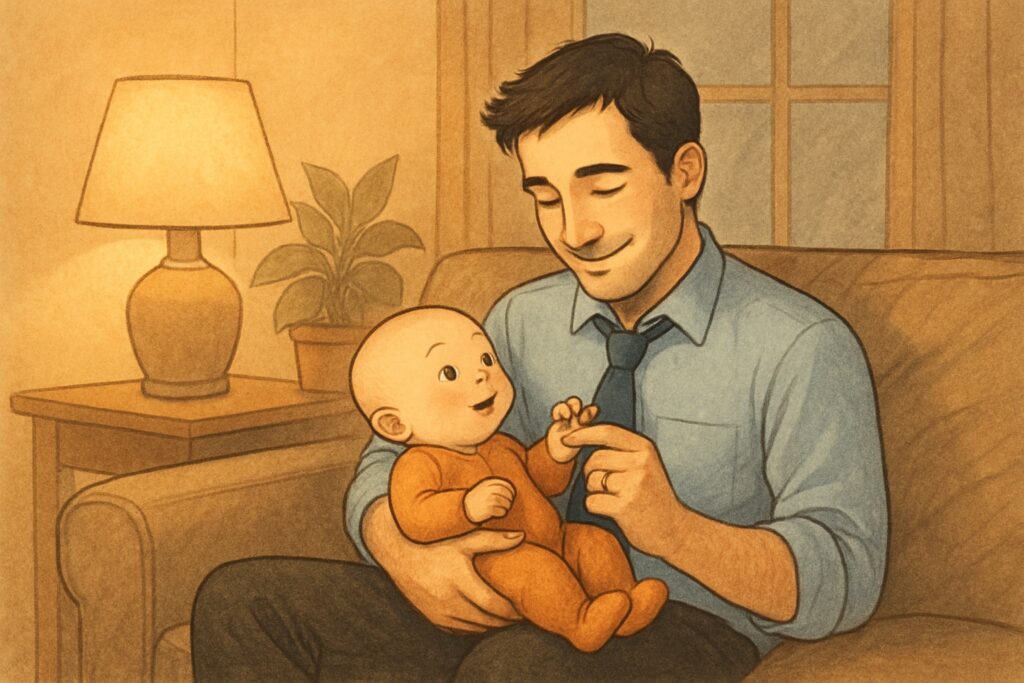
How Dads Working Long Hours Can Still Build a Powerful Bond With Their Baby

It’s 8:30 p.m. You just walked through the door after a 10-hour workday. The house is dim, the kitchen still smells like dinner, and somewhere in the nursery, your baby is winding down for bed — or maybe already asleep.

You feel a familiar ache — the tug of guilt mixed with the yearning to be closer, more present. If this sounds like you, you’re not alone. Many fathers face the same tension: providing for their family while longing to feel truly connected to their child.

The truth? You can form a deep, loving bond with your baby — even with long work hours. The key isn’t the quantity of time, but how purposefully and consistently you use the time you do have. Here’s how.

How Dads Working Long Hours Can Still Build a Powerful Bond With Their Baby

Why Father-Baby Bonding Is a Game-Changer (And Why Timing Isn’t Everything)

There’s often an unspoken myth that if you’re not around 24/7 during your baby’s first year, you’ve missed the most important window. But modern research paints a different picture.

Babies don’t clock your hours — they respond to reliable, nurturing interactions. Whether you’re there for one hour or ten, your calm voice, gentle touch, and emotional presence can shape your baby’s sense of safety, connection, and identity.

Strong paternal bonds have been shown to:

  • Boost your baby’s emotional development
  • Improve social and verbal skills
  • Reduce stress for both partners
  • Strengthen your confidence as a dad

So forget the guilt. Let’s focus on what you can do — right now.


1. Make Arrival Moments Sacred — Not Rushed

You might not control when you get home, but you can control how you show up. The first few minutes after you walk through the door can become a daily ritual of connection.

Set down your phone. Let go of the workday. Sit on the floor or gently pick your baby up. Talk to them. Smile. Match their expressions. Even a quick five-minute session of face-to-face connection has more impact than you think.

Over time, your baby will start recognizing this pattern. That moment of reconnection becomes something they look forward to — a signal that their dad is home, and they matter.


2. Own the Bedtime Routine (Even Just Part of It)

If you’re consistently home in the evenings, even briefly, consider making bedtime your special domain. Babies crave routine, and dads who become part of the bedtime flow — even just one step — create a sense of dependable care.

Here’s what that could look like:

  • Changing into pajamas while softly chatting
  • Reading a short story together
  • Singing the same lullaby every night
  • Giving a gentle bottle feed or cuddle

You don’t need to “do it all” to make an impact. Just be present. Let your voice and touch anchor the end of their day.


3. Make Mornings a Mini Routine

Mornings are often overlooked, but they can be the unsung heroes of father-baby bonding — especially for working dads. If you can spare even ten extra minutes, they can turn into beautiful rituals.

Try this:

  • Change the first diaper of the day and narrate your actions (“Let’s get you dry and fresh!”)
  • Hold your baby by a sunny window and hum or speak softly
  • Eat breakfast with them nearby in their bouncer, chatting with them as you sip your coffee

These small, everyday moments help build emotional familiarity, even when you have to rush out the door afterward.


4. Protect Your Weekends Like Family Gold

For working fathers, weekends are more than time off — they’re golden chances to dive into undistracted, deeper-level connection.

Use that time intentionally:

  • Strap on a baby carrier and go for a neighborhood walk
  • Get hands-on with diaper changes, meals, and naps
  • Do nothing but hold them while you listen to music or read a book
  • Narrate everything you’re doing — babies love your voice, even when it’s just “I’m folding your laundry now”

It’s not about doing “special” things. It’s about showing up fully, without distractions. No phone. No work emails. Just time carved out for them.


5. Use Technology to Be Present While Apart

Sometimes, you can’t be there physically. But emotional presence can still be felt across time and space.

Ask your partner to send short clips of your baby playing or giggling. Schedule a video call during your lunch break, even for a minute. Or record a “goodnight” video message your baby can watch daily.

Not only will this help your baby recognize your voice and face, but it also helps you feel more included, reducing the emotional distance long hours can create.


6. Take Ownership of One Daily Task

When time is limited, consistency becomes your ally. Choose one baby-related task you can claim as your own — and stick to it.

This might be:

  • The first diaper change in the morning
  • Cleaning bottles every night
  • Evening stroller walks
  • Singing the same lullaby before bed

By doing this one thing every day, you establish yourself as a constant in your baby’s life. It’s less about the task, more about the connection it reinforces.


7. It’s Okay If Bonding Feels Awkward at First

Many dads, especially first-timers, expect to feel an instant connection. When it doesn’t happen, frustration creeps in. But here’s something every father needs to hear:

Bonding isn’t always immediate. And that’s perfectly normal.

Your baby may be sleepy, fussy, or non-responsive at times. But those repetitive, gentle acts — feeding, holding, singing, rocking — they’re building a foundation. Over days, weeks, and months, they add up to something unshakable.

So let go of the pressure to “feel it” instantly. Your steady presence is the connection.


8. Talk to Your Partner About How You Can Show Up

Sometimes, the struggle isn’t just about time — it’s about not knowing where you fit in. That’s why communication with your partner is crucial.

Ask them:

  • “Is there a time of day I can take over consistently?”
  • “What do you need help with that also gives me time with the baby?”
  • “How can I support you while still connecting with our baby?”

By finding roles that support both your partner and your bond with the baby, you create a stronger team — and a healthier home.


9. Focus on Presence, Not Perfection

Forget trying to be a Pinterest-perfect dad. Your baby doesn’t care how skilled you are at burping or how many baby books you’ve memorized. What they remember — and respond to — is how you made them feel.

Laugh with them. Be silly. Let them nap on your chest. Talk to them like they’re your favorite person in the world. Because they are.

It’s not about how much time. It’s about how real you are in the time you give.

source: COOL PEACHY

You’re Already Enough

Being a dad who works long hours can feel like a constant balancing act between responsibility and regret. But here’s the truth most dads don’t hear enough:

You don’t have to be perfect. You just have to show up with your heart open.

Babies don’t keep score. They don’t need grand gestures. They just need to feel seen, safe, and loved — and that’s something you can give, even in the margins of a busy schedule.

You’ve got this.

The written content on this page was generated by ChatGPT.