Tag: baby learning toys

Top Sensory Toys That Stimulate Baby’s Mind and Motor Skills

Babies learn the world one tiny moment at a time. A simple touch, a soft sound, or a flash of color is often their first lesson in how life works. What may look like play is actually serious brain building in progress. Every reach, grab, shake, and stare helps shape how a baby thinks, moves, and understands their surroundings.

This is where sensory toys become so important. They are not just cute distractions. They are carefully chosen tools that support early brain development and physical coordination during the most important stage of growth.

For parents, especially first time caregivers, understanding which toys actually help can feel overwhelming. There are shelves full of options, but only a few truly support sensory learning in a meaningful way. This guide breaks everything down in a simple and practical way so you can choose toys that truly help your baby grow.
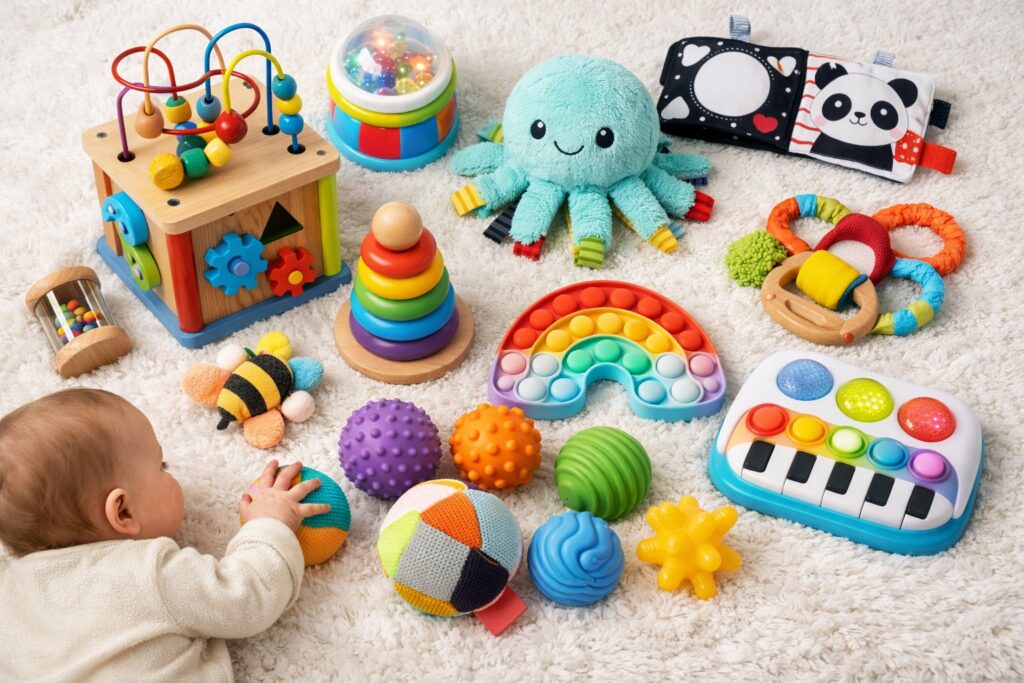
Top Sensory Toys That Stimulate Baby’s Mind and Motor Skills

Why Sensory Play Is Important in Early Development

A baby’s brain develops at a rapid pace during the first year of life. In fact, this is when most of the brain’s foundational connections are formed. Sensory play supports this process by encouraging babies to use their senses together.

When a baby touches something soft, hears a sound, and watches it move at the same time, the brain starts building connections between those experiences. Over time, this improves learning, memory, and coordination.

Sensory play helps babies develop:

Hand control and grip strength
Body movement and coordination
Early thinking and problem solving
Focus and attention
Awareness of cause and effect

Even simple actions like squeezing a toy or staring at a moving object are meaningful learning moments.


What Makes a Good Sensory Toy

Not every toy labeled as educational is truly helpful for development. The best sensory toys usually share a few important qualities.

Varied textures that encourage touch exploration
Soft but engaging sounds that are not overwhelming
Bright or high contrast colors that attract attention
Lightweight design that is easy for small hands to hold
Safe materials that are non toxic and baby friendly

The goal is not complexity. The goal is stimulation without overload.


Best Sensory Toys for Baby Development

Soft Rattles That Encourage Early Coordination

Rattles are often a baby’s first real toy, and for good reason. They respond directly to movement. When a baby shakes a rattle and hears a sound, they begin to understand that their actions create results.

This simple discovery builds early thinking skills and encourages repetition, which strengthens coordination over time. Soft handles and lightweight designs make it easier for babies to practice gripping and shaking.


Teething Toys With Different Textures

Teething toys serve two purposes at once. They help soothe discomfort during teething while also introducing different textures for babies to explore.

Some areas may feel smooth while others are bumpy or ridged. This variety helps babies understand differences in touch, which is an important part of sensory learning.

As babies chew and hold these toys, they are also improving jaw strength and hand coordination without even realizing it.


Crinkle Toys and Soft Fabric Books

Crinkle toys are especially exciting for babies because of the sound they make. That soft crinkling noise often grabs attention instantly and encourages repeated interaction.

Fabric books add even more value because they combine sound, texture, and visual storytelling. Even before babies can understand stories, they begin to recognize patterns, shapes, and colors.

These toys are especially helpful during quiet play time and early bonding moments with parents.


Activity Mats and Play Gyms

Activity mats create a full play environment that supports both movement and exploration. Hanging toys encourage babies to reach and kick, while soft surfaces support tummy time.

Tummy time is especially important because it strengthens neck, shoulder, and core muscles. Over time, this builds the foundation for crawling, sitting, and walking.

Play gyms also help babies learn how their body moves in space, which is an important part of motor skill development.


Baby Safe Mirrors

Mirrors are surprisingly powerful learning tools for infants. Babies are naturally drawn to faces, and seeing their own reflection helps them begin to recognize movement and expression.

During tummy time, mirrors encourage babies to lift their heads and stay engaged longer. This strengthens neck muscles while also supporting visual tracking skills.


Sensory Balls for Grip and Movement

Soft sensory balls are perfect for encouraging both fine and gross motor skills. Their texture makes them easy to hold, squeeze, and explore.

As babies grow, they begin rolling or tossing the balls, which helps improve coordination and spatial awareness. Different surface textures also provide added sensory input.


Musical Toys for Sound Awareness

Gentle musical toys introduce babies to rhythm, tone, and sound patterns. These early auditory experiences support listening skills and memory development.

Simple buttons or motion activated sounds also reinforce cause and effect learning. Babies quickly learn that their movement can create music or sound.


Stacking and Nesting Toys for Early Problem Solving

Even before babies can stack objects correctly, they enjoy holding, turning, and exploring stacking toys. These early interactions help build understanding of size, shape, and order.

As they grow, stacking becomes a natural next step that supports problem solving and hand eye coordination.


How Parents Can Make Sensory Play More Effective

Toys alone are not the full experience. The way you interact with your baby during play makes a big difference.

Rotate toys instead of giving everything at once to keep interest high
Sit with your baby and talk during play to support language development
Use toys during tummy time to make it more enjoyable
Watch your baby’s reactions to learn what they enjoy most
Keep play sessions short and positive to avoid overstimulation

The goal is not to fill every moment with activity but to create meaningful moments of exploration.


Safety Matters in Every Stage

Safety should always be the first priority when choosing toys for infants.

Avoid toys with small detachable parts
Check materials regularly for wear and tear
Choose BPA free and baby safe materials
Clean toys often since babies explore with their mouths
Always supervise play, especially during early months

A safe environment allows babies to explore freely without risk.

source: Emma Hubbard

Final Thoughts

Sensory toys play a quiet but powerful role in early development. They help babies understand movement, sound, texture, and interaction in a way that builds lifelong learning skills.

What matters most is not how many toys a baby has, but how meaningful those toys are. Simple rattles, soft textures, and interactive play can have a lasting impact when used consistently and with attention.

Every shake, squeeze, and touch is part of your baby’s learning journey. Choosing the right sensory toys helps make that journey more engaging, supportive, and joyful.

The written content on this page was generated by ChatGPT.
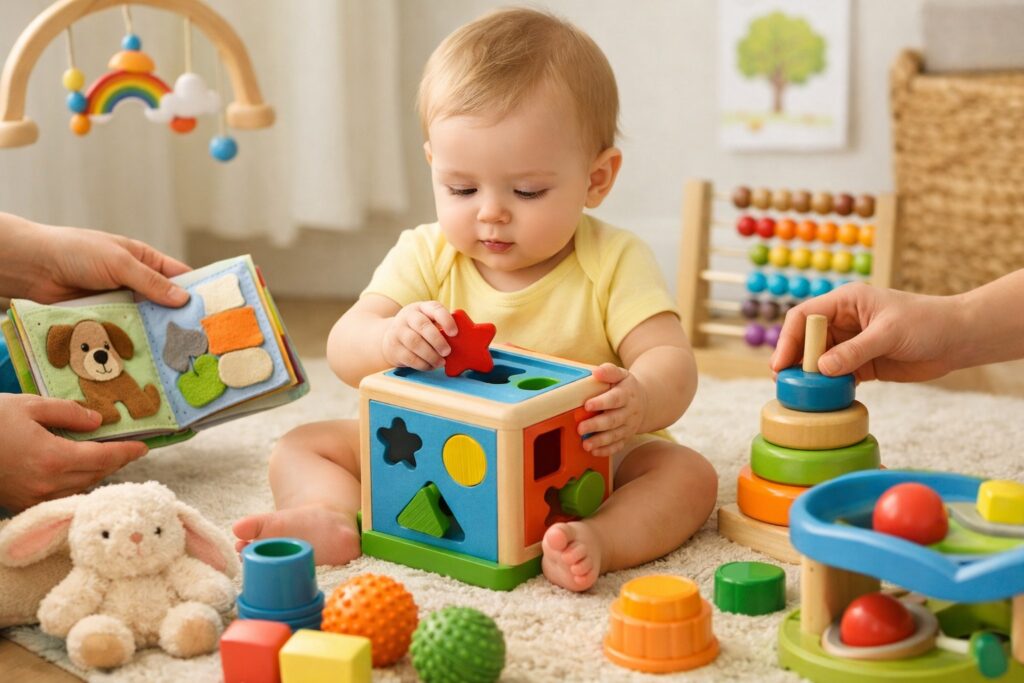
How to Choose Age-Appropriate Toys That Help Your Baby Learn

Walk into any baby store or browse online for a few minutes, and you’ll quickly realize how overwhelming toy shopping can feel. Shelves are packed with colorful gadgets promising smarter babies, faster development, and endless entertainment. For new parents especially, it raises an important question: Do babies really need all these toys, and how do you know which ones actually help them learn?

The truth is that babies do not learn from toys alone. They learn through exploration, repetition, and interaction with the world around them. The right toy simply becomes a tool that supports curiosity and development at the right moment in their growth. Choosing toys that match your baby’s age and abilities can encourage learning naturally while preventing frustration or overstimulation.

This guide will help you understand how to select toys that truly support your baby’s development while keeping playtime meaningful, safe, and enjoyable.

How to Choose Age-Appropriate Toys That Help Your Baby Learn

Why Age-Appropriate Toys Make a Difference

During the first years of life, a baby’s brain develops at an extraordinary pace. Every sound, texture, movement, and interaction helps build neural connections that shape future learning abilities. Toys that align with developmental stages encourage babies to practice new skills they are just beginning to master.

When toys are too advanced, babies may lose interest because they cannot yet understand how to use them. On the other hand, toys that are too simple may fail to hold attention long enough to promote learning. Age-appropriate toys strike a balance by offering just enough challenge to spark curiosity.

Well-chosen toys can help babies:

  • Strengthen fine and gross motor skills
  • Improve focus and attention span
  • Develop early problem-solving abilities
  • Explore sensory experiences safely
  • Build confidence through independent discovery

Rather than accelerating development artificially, the goal is to support skills that are already emerging.


Understanding Developmental Stages and Play Needs

Every baby grows at their own pace, but developmental milestones provide helpful guidance when choosing toys.

Birth to 3 Months: Discovering the Senses

Newborns are still adjusting to the world outside the womb. Their vision is limited, and they respond best to high-contrast patterns and gentle sounds.

Ideal toys include:

  • Soft rattles with subtle noise
  • Black-and-white visual cards
  • Plush toys with different textures
  • Mobiles with slow movement

At this stage, simple sensory stimulation matters more than complex features.


3 to 6 Months: Reaching and Grasping

As babies gain control over their hands, they begin reaching intentionally. Toys that encourage grasping help strengthen muscles and coordination.

Look for:

  • Lightweight rattles
  • Teething toys
  • Crinkle fabric books
  • Soft activity mats

Babies also start exploring objects with their mouths, so safe materials are essential.


6 to 9 Months: Exploration Begins

Once babies can sit independently, play becomes more interactive. They enjoy experimenting with cause and effect, such as dropping objects repeatedly just to watch them fall.

Helpful toys include:

  • Stacking cups
  • Soft blocks
  • Activity centers
  • Simple musical toys

Repetition during this stage is not boredom. It is learning in action.


9 to 12 Months: Movement and Curiosity

Crawling and pulling up open new opportunities for discovery. Babies want toys that move, respond, or encourage physical activity.

Good options are:

  • Push toys
  • Pop-up toys
  • Rolling balls
  • Interactive play tables

These toys support coordination while encouraging exploration.


12 Months and Beyond: Early Problem Solving

As babies approach toddlerhood, imitation and problem-solving become central to play.

Consider introducing:

  • Shape sorters
  • Simple puzzles
  • Toy instruments
  • Pretend play items

At this age, toys that mimic real-life activities become especially engaging.


Safety Should Always Come First

Developmental benefits mean little if a toy is unsafe. Babies explore intensely, often using their mouths, so careful inspection is essential.

Before purchasing a toy, check that it:

  • Is made from non-toxic materials
  • Has no sharp edges or loose parts
  • Meets safety standards for your region
  • Can be cleaned easily
  • Is sturdy enough to withstand dropping and chewing

Avoid toys with detachable pieces small enough to pose choking risks, especially during the first year.


Supporting Different Types of Learning Through Play

Not all toys serve the same purpose. A balanced toy collection encourages multiple areas of development.

Sensory Play

Textures, colors, and sounds help babies understand their environment. Sensory toys stimulate sight, hearing, and touch simultaneously.

Examples include textured balls, fabric books, and gentle sound toys.

Motor Skill Development

Toys that require movement help strengthen muscles and coordination.

Stacking rings, blocks, and pull toys encourage physical engagement and control.

Cognitive Development

Cause-and-effect toys teach babies that actions produce results, laying the groundwork for logical thinking.

Buttons that activate music or toys that pop open when pressed are excellent examples.

Social and Emotional Learning

Interactive toys encourage communication and bonding. Dolls, puppets, and shared play experiences help babies recognize emotions and social cues.


Choosing Toys That Grow With Your Child

Parents often feel pressure to constantly buy new toys, but versatile toys can remain useful for months or even years.

Multi-stage toys offer better long-term value because babies discover new ways to use them as skills improve.

Examples include:

  • Stacking cups used for building, sorting, and water play
  • Blocks that transition from knocking down to building structures
  • Activity tables adaptable for sitting and standing play

Open-ended toys encourage imagination rather than limiting play to a single function.


Avoiding Toy Overload

More toys do not equal more learning. In fact, too many choices can overwhelm babies and reduce focus.

A smaller selection of thoughtfully chosen toys allows deeper engagement. Rotating toys every week or two keeps playtime fresh without constant purchases.

Many child development experts observe that babies often spend longer exploring familiar toys when distractions are minimized.


How Parents Can Make Toys More Educational

The most powerful learning tool is not the toy itself but the interaction surrounding it. Babies learn best when caregivers participate.

You can enhance learning by:

  • Talking about what your baby is doing
  • Naming colors, shapes, and actions
  • Demonstrating new ways to play
  • Encouraging exploration without correcting constantly
  • Celebrating small discoveries

Even a simple rattle becomes a language lesson when paired with conversation and eye contact.


Signs a Toy Is Right for Your Baby

A well-chosen toy often leads to noticeable behaviors:

  • Your baby returns to it repeatedly
  • They experiment with new movements
  • Playtime lasts longer over time
  • Frustration remains minimal
  • Curiosity increases naturally

Engagement is a stronger indicator than flashy features or electronic functions.


Building a Thoughtful Toy Collection

Instead of chasing trends, focus on variety and purpose. A balanced collection might include:

  • One or two sensory toys
  • A motor skill toy
  • A cause-and-effect toy
  • An interactive or comfort toy
  • An open-ended toy for creativity

This approach supports holistic development without clutter.

source: Emma Hubbard

Final Thoughts

Choosing age-appropriate toys is less about finding the “perfect” product and more about understanding your baby’s current stage of growth. Toys should invite exploration, encourage movement, and create opportunities for connection between parent and child.

The best learning happens when babies feel curious, supported, and free to explore at their own pace. When toys match developmental readiness, playtime becomes more than entertainment. It becomes a foundation for confidence, creativity, and lifelong learning.

In the end, the simplest toys often create the richest experiences, especially when shared with a caring and engaged parent.

The written content on this page was generated by ChatGPT.